How to Create a Family Media Plan That Works!

Let’s face it—technology is everywhere, and managing screen time has become one of the most common (and exhausting) conversations in modern parenting. But here’s the good news: creating a family media plan doesn’t have to feel like a battle. With a little structure and open communication, you can build a plan that supports healthy habits and keeps everyone in your home on the same page.

Here’s how to create a family media plan that actually works for your unique household.

What Is a Family Media Plan?

A family media plan is a shared set of guidelines that helps families manage how, when, and why media is used at home. It covers screen time, device use, content choices, and how tech fits into your family’s values.

Think of it as your household’s “tech mission statement” – designed to promote balance, protect mental health, and build trust between parents and kids.

Step 1: Involve the Whole Family

Before setting rules, include your kids in the conversation. Ask questions like:

  • What do you love doing online?
  • What shows or games make you feel good—or not so good?
  • How does screen time affect your sleep, school, or mood?

This opens the door to honest conversations and gives kids ownership in the plan, making them more likely to respect it.

Step 2: Set Clear (and Age-Appropriate) Limits

Every family is different, but here are some starting points to consider:

  • Preschoolers (ages 2–5): 1 hour per day of high-quality content.
  • Kids 6–12: Prioritize balance with homework, sleep, and play.
  • Teens: Encourage screen self-awareness and time boundaries.

💡 Pro Tip: Don’t just say “1 hour of screen time.” Be specific:
“30 minutes of games after homework, 30 minutes of YouTube before dinner.”

Step 3: Define Screen-Free Zones and Times

Boundaries work best when they’re simple and consistent. Try these:

  • 📵 No phones at the dinner table.
  • 😴 No screens 1 hour before bed.
  • 🚗 No personal devices in the car (unless it’s a road trip).
  • 🛋️ Family movie nights = no second screens.

Create tech-free zones in bedrooms, bathrooms, and family meals to encourage connection and reduce overuse.

Step 4: Focus on Quality, Not Just Quantity

Not all media is created equal. Help your kids:

  • Choose educational and enriching content.
  • Watch shows or play games that align with your family’s values.
  • Avoid content with heavy advertising, violence, or negative messaging.

Use resources like Common Sense Media to check ratings and reviews before watching something new.

Step 5: Keep the Conversation Going

A media plan isn’t “set it and forget it.” As your kids grow, their interests—and responsibilities—change too. Set aside time every few months to revisit the plan and adjust together.

Ask:

  • Is this plan still working for us?
  • What’s changed in your school, friendships, or schedule?
  • Are there new apps, games, or shows we should talk about?
Free Tools to Help You Get Started
  • American Academy of Pediatrics Media Plan Tool
  • Printable Media Contract for Kids & Teens
  • App/Screen Time Trackers like Apple Screen Time or Google Family Link
Sample Family Media Plan Rules

Here’s an example you can edit:

RuleWho It Applies ToNotes
No devices during mealsEveryoneEncourages family conversation
Screen time ends at 8 PMKids under 12To protect sleep hygiene
1 hour of screen time on school daysAll kidsHomework must be done first
Movies must be approvedKidsUse reviews or previews first
Unlimited educational gamesAllMust still include outdoor time
Final Thoughts

The goal of a family media plan isn’t to be overly strict—it’s to create a healthy, thoughtful relationship with technology. By setting expectations and checking in regularly, you can help your kids grow into mindful digital citizens and keep your household running a little smoother.

What Works for You?

Have you tried a media plan in your home? What rules or ideas helped your family the most? Share your thoughts in the comments—we’d love to hear your tips!
How to Play – Memory Match

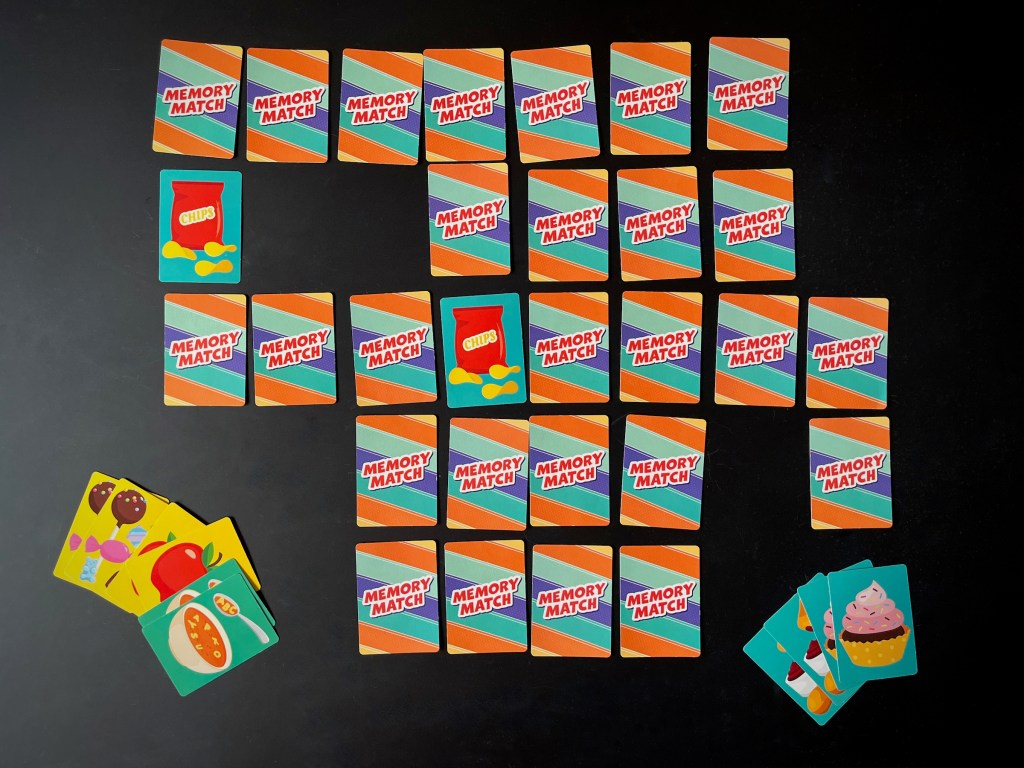
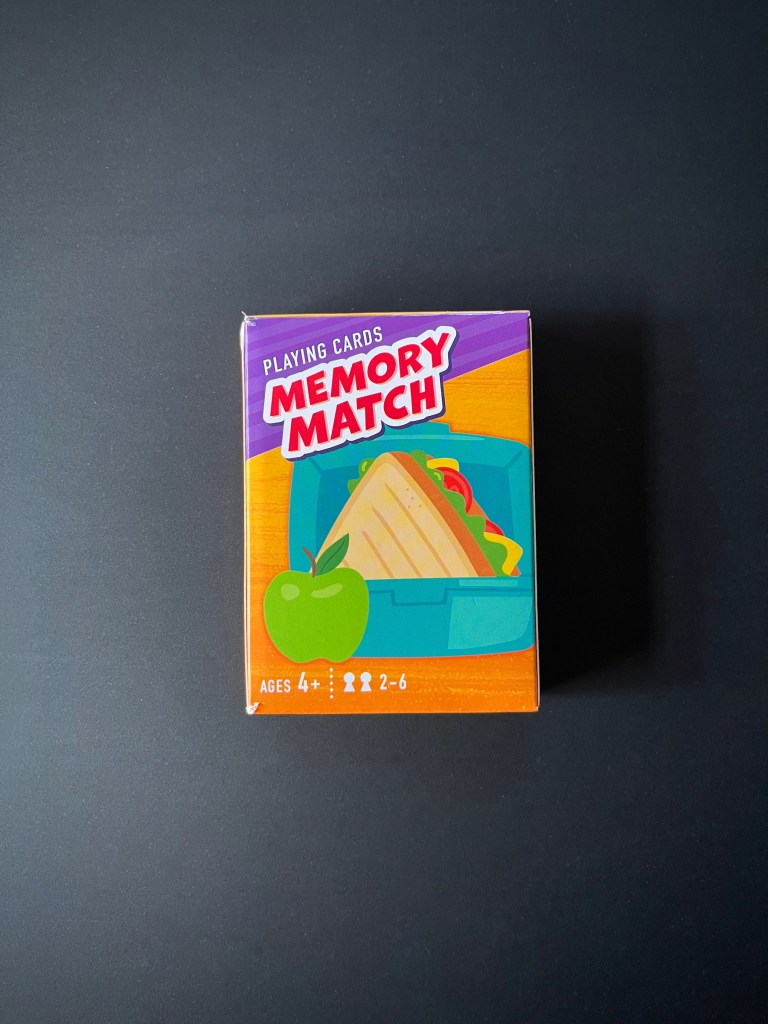
Part of the fun in raising Zoey is finding things that delight and educate her; I want to find fun, creative board games to play with her during our family game nights! This week we played Memory Match, the LotFancy version, for 2 to 6 players.

This specific memory match game is designed for kids and does a great job building visual recognition and, of course, memory recall. The graphics are adorable and gameplay is fun and engaging; especially when competition narrows in Zoey’s focus.

So let’s play!

IN THE BOX
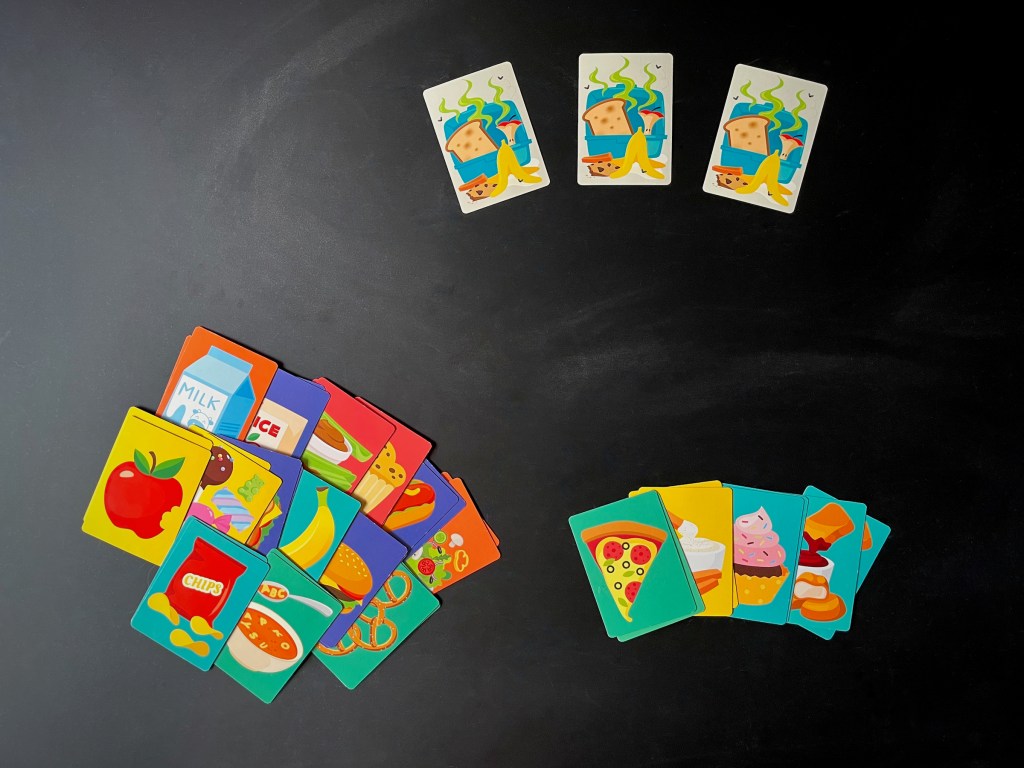
  • 39 cards
INSTRUCTIONS
  1. For standard play, remove the 3 stinky lunchbox cards. For more of a challenge, leave them in the deck.
  2. Shuffle the deck and lay them face down so the cards are not overlapping. You may place them in a grid or randomly, it’s up to you.
  3. Players take turns, the youngest player goes first.
  4. On your turn, flip two cards face-up. Make sure that the other players can see the cards too.
  5. If the two cards match, you get to keep them! Place them in a score pile in front of you. As a reward, you get to go again and flip over two more cards.
  6. If you do not make a match, flip the cards back over so they are hidden, your turn is over.
  7. If you are playing with the stinky lunch box cards and you turn one over, your turn is over.
  8. Play continues to the left and the next player takes their turn.
  9. When all the cards have been picked up (minus the stinky lunchbox cards if in play), each player counts the pairs of food they’ve collected. The player with the most food wins! 

ENJOY!

How to Play – Disney Eye Found It!

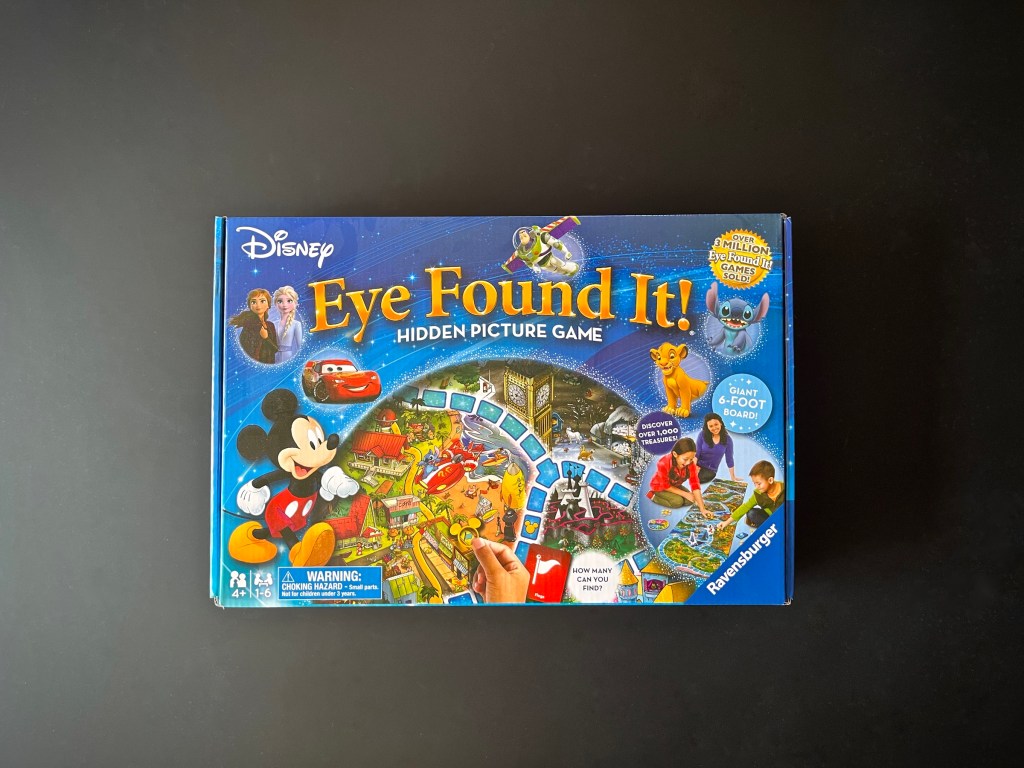
Part of the fun in raising Zoey is finding things that delight and educate her; I want to find fun, creative board games to play with her during our family game nights! This week we played Disney’s Eye Found It! for 1 to 6 players.

This is a cooperative game, which is nice when you’re not feeling competitive and want to focus on teamwork instead. Zoey enjoys the Disney content and searching the board for hidden objects (so do I honestly). The only warning I will give is that the game board is rather large, you’ll either need a long table, countertop, or you can set it up on the floor like we do!

So let’s play!

IN THE BOX
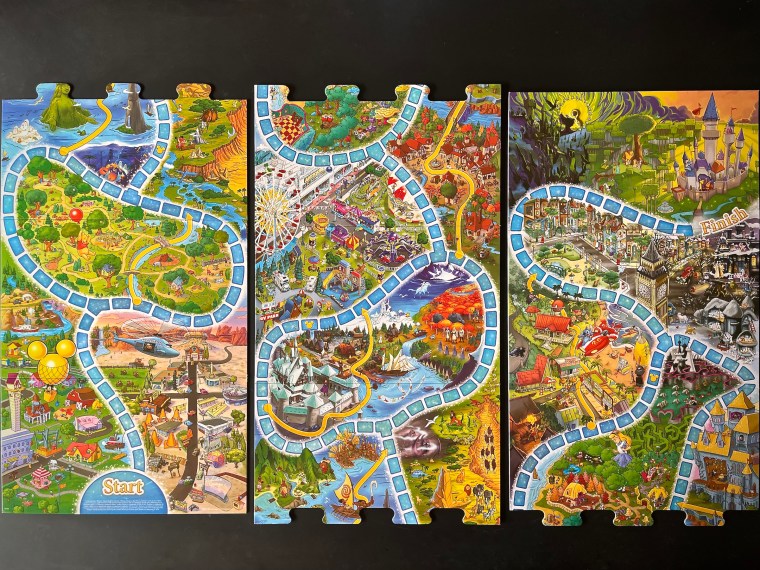
  • 1 game board (in 3 sections)
  • 6 characters
  • 6 character bases
  • 1 spinner
  • 12 Mickey marker
  • 30 search cards
  • 1 sand timer
INSTRUCTIONS
  1. Unfold the game board sections and connect them.
  2. Set the Mickey markers, sand timer and spinner near the board.
  3. Shuffle the search cards and put them in a pile near the board. Either the blue or red sides may face up.
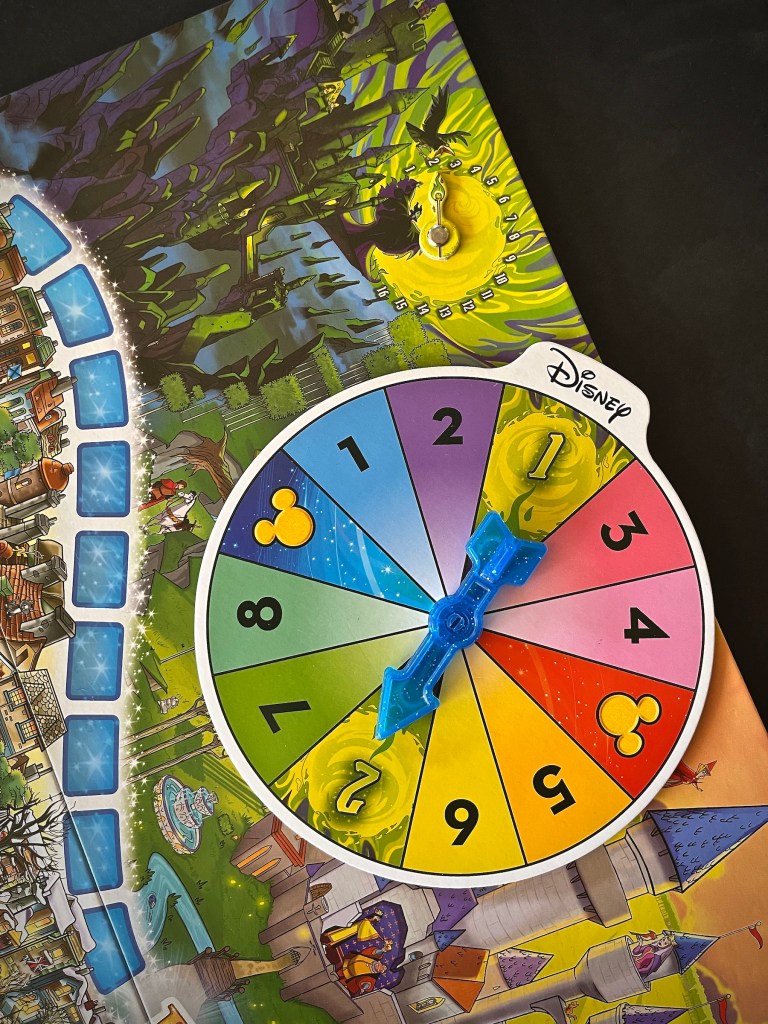
  4. Set Maleficent’s staff to “1”.
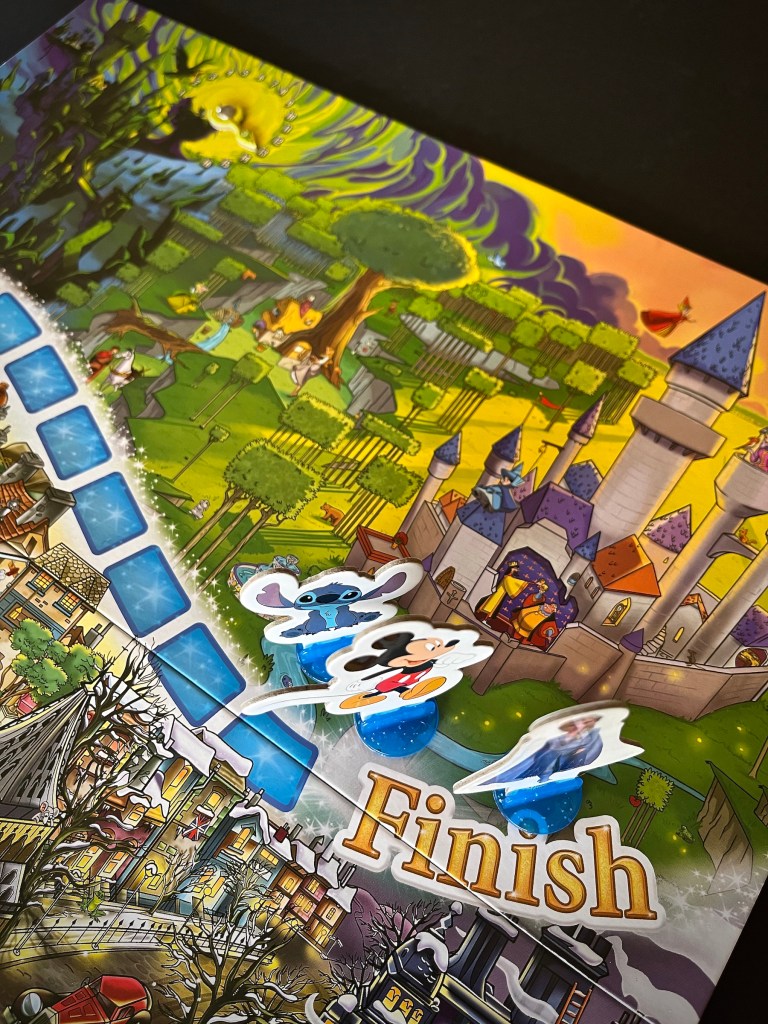
  5. Insert each character into a base. Each player chooses a chapter and puts them on the “Start” space.
  6. The youngest player goes first. On your turn, spin the spinner and follow its instructions:
    • Move – Move your character forward the number of spaces indicated.
      1. If you land on a shortcut, follow the arrow.
      2. If you get to a fork in the road, choose which way to go.
      3. If you land on a “search” space, follow the search rules.
    • Maleficent’s Magic – Move the staff one or two spaces forward, then spin again!
    • Search – If the spinner or your character land on a “search” space, draw the top card of the deck.
      1. If you spun a search on the spinner, use the side of the card matching the color on the spinner. If your character landed on a search space you may choose which side of the card to use. 
      2. Start the timer. All players help look for the object(s) shown, hidden on the game board. Each time you find one put a Mickey marker  on it so you remember where it is. When the time runs out, stop looking and count up all the Mickey markers you placed on the board. Everyone’s character moves forward that many spaces!
  7. If all players arrive at Aurora’s castle before Maleficent casts her spell (when her staff reaches 16), you all win!

ENJOY!

Happy New Year 2025!

Happy New Year Friends! I wish you all the best and sincerely hope all your hopes and dreams for 2025 will come to fruition. These last few years have been rocky, to say the least, but its a time for fresh starts and new beginnings, so let’s make the most of it!

I believe in making resolutions; they give you the focus to complete certain tasks. Resolutions can be made any time of the year, and should be in some cases, but it’s traditional to make them for the fresh start of a new year and it’s all in good fun!

I’ve set 12 resolutions for 2025, check them out!

  1. Complete a logic puzzle book.
  2. Eat less meat.
  3. Fill a sketchbook.
  4. Install new flooring.
  5. Organize and paint the kitchen.
  6. Play and complete 25 video games.
  7. Progress in Duolingo lessons.
  8. Read and complete 25 books.
  9. Re-organize and re-design blog.
  10. Take Zoey to Disneyland.
  11. Watch and complete 25 movies I’ve never seen.
  12. Write down 3 gratitudes a day.

How to Play – Winnie the Pooh Snow Parade Game

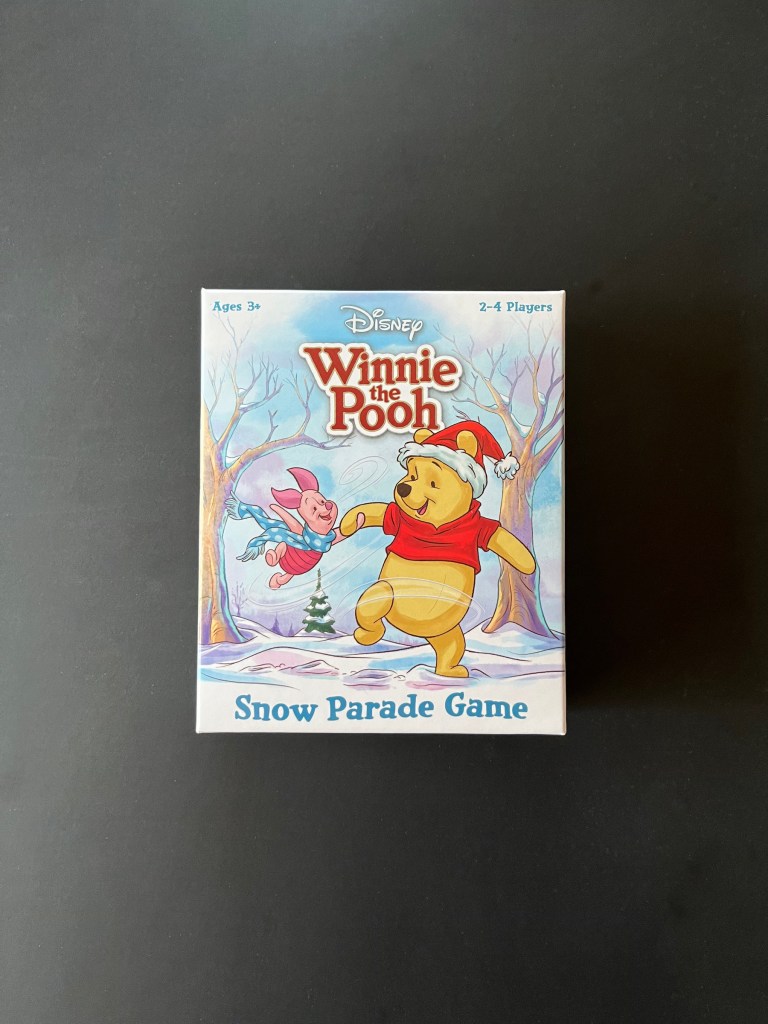
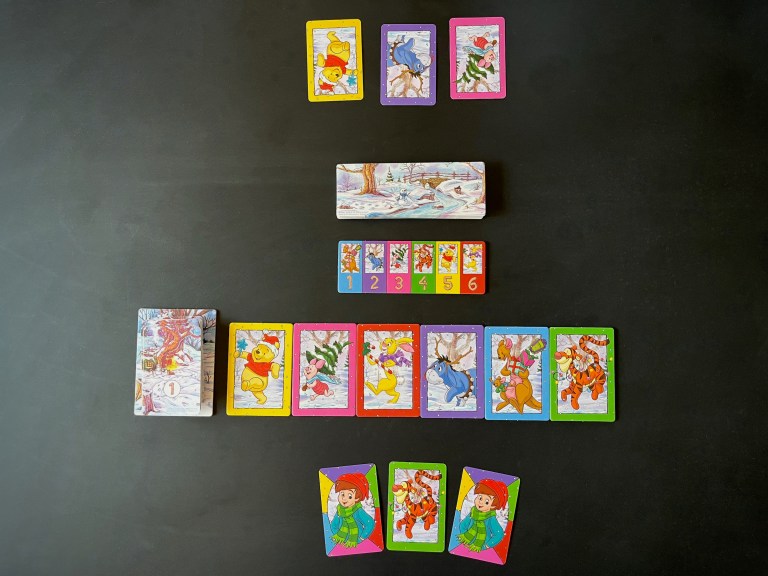
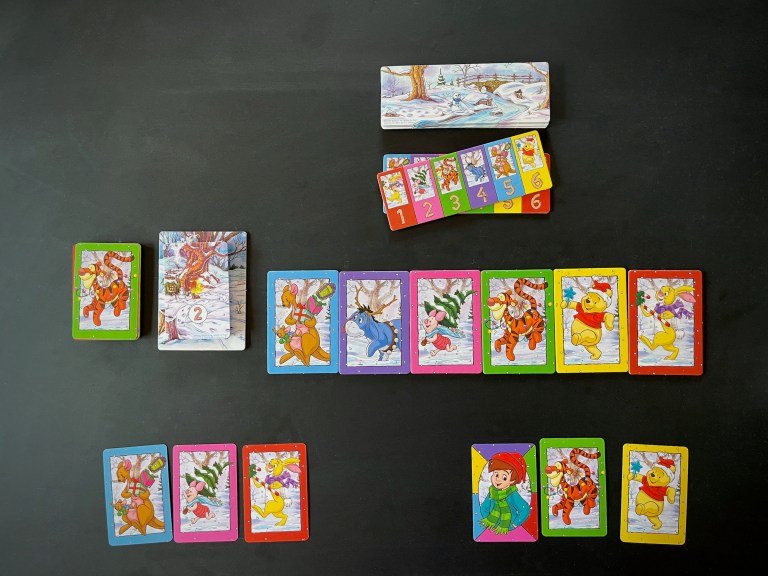
Part of the fun in raising Zoey is finding things that delight and educate her; I want to find fun, creative board games to play with her during our family game nights! This week we played Winnie the Pooh – Snow Parade Game  for 2 to 4 players!

I purchased this game on a whim! I saw Winnie the Pooh and I saw the Christmas/Winter theme, and it piqued my curiosity! It was worth it! We enjoy that this game is cooperative, which is a nice departure from the competitive games we’ve been playing!

So let’s play!

IN THE BOX
  • Home tile
  • 6 character tiles
  • 6 parade tiles
  • 40 cards
INSTRUCTIONS
  1. This is a cooperative game, you will all win or lose together! Play cards to move or swap the order of the character tiles in the parade. If you can complete the goal number of parade tiles without running out of cards, you all win the game!
    • Easy – Complete 3 parade tiles
    • Medium – Complete 4 parade tiles.
    • Hard – Complete 5 parade tiles.
  2. Place all the tiles in the middle, where everyone can reach them.
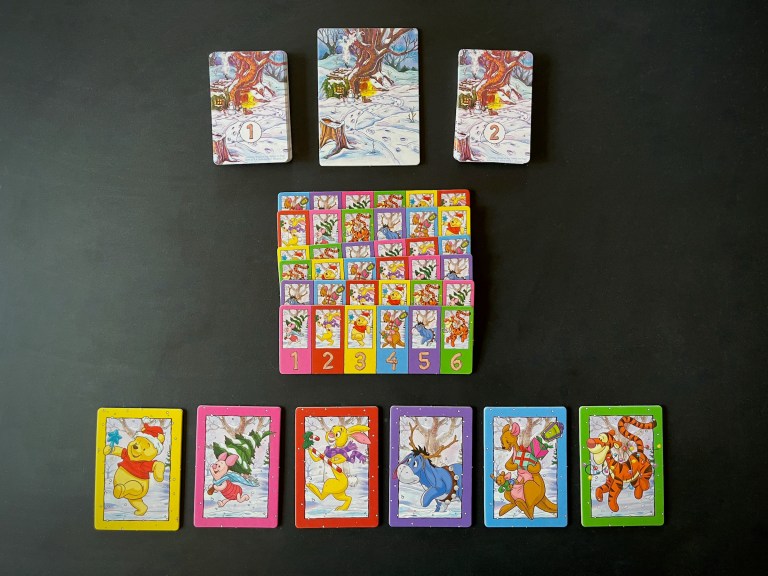
  3. Place the six character tiles face up in a line to the right of the home tile in order from 1 to 6 (the numbers are on the backs). This is the parade!
  4. Separate the cards into two piles by the numbers on the backs (1 or 2). Shuffle each pile.
  5. Place the number 1 pile of cards on top of the number 2 pile, then place this single deck on top of the home tile.
  6. Each player draws a number of cards based on the number of players. Place your cards face up so all the players can see them.
    • 2 players: 3 cards each
    • 3 to 4 players: 2 cards each.
  7. Mix the parade tiles and place them in a pile above the character tiles, face-down. Flip one tile face-up.
  8. Starting with the youngest player and moving clockwise, you can do one of these 3 actions on your turn:
    • Move a character: Play a card to move the matching character tile forward or backward one spot in the parade. Character tiles at the front of the parade can only be moved backward and character tiles at the back of the parade can only be moved forward.
    • Swap: Play a card and choose another player to also play a card. Swap the spots of those two matching character tiles in the parade.
    • Discard: Discard your cards and draw all new cards from the deck.
    • Christopher Robin: The Christopher Robin card is wild and can be played as any character.
  9. If all character tiles in the parade match the order on the current parade tile, you’ve completed it! Set it aside and flip the next parade tile over! 
  10. At the end of your turn, if you played a card, draw a new one from he deck. If another player helped you swap, you each draw a card.
  11. If the deck runs out, keep taking turns until players have no cards left to play. 
  12. If you complete the goal number of parade tiles before you run out of cards to play, all the players win!

ENJOY!

Family Friendly Christmas Children’s Books – Ages 2 to 8

Welcome to the cozy and magical month of December my friends!

To inspire you and your little ones into the Holiday mood, I’ve curated a list of Christmas-themed books for ages 2 to 8! These selections are simple and festive, while remaining relatively short and sweet for the younger audience.

If you’re looking for a list of family friendly Christmas children’s books for children under 5 years of age, I’ve created a list for that too! You can find that list here.

If you have a favorite Christmas book for children ages 2 to 8 that you do not see here, please let me know! I would love to add it to this list!

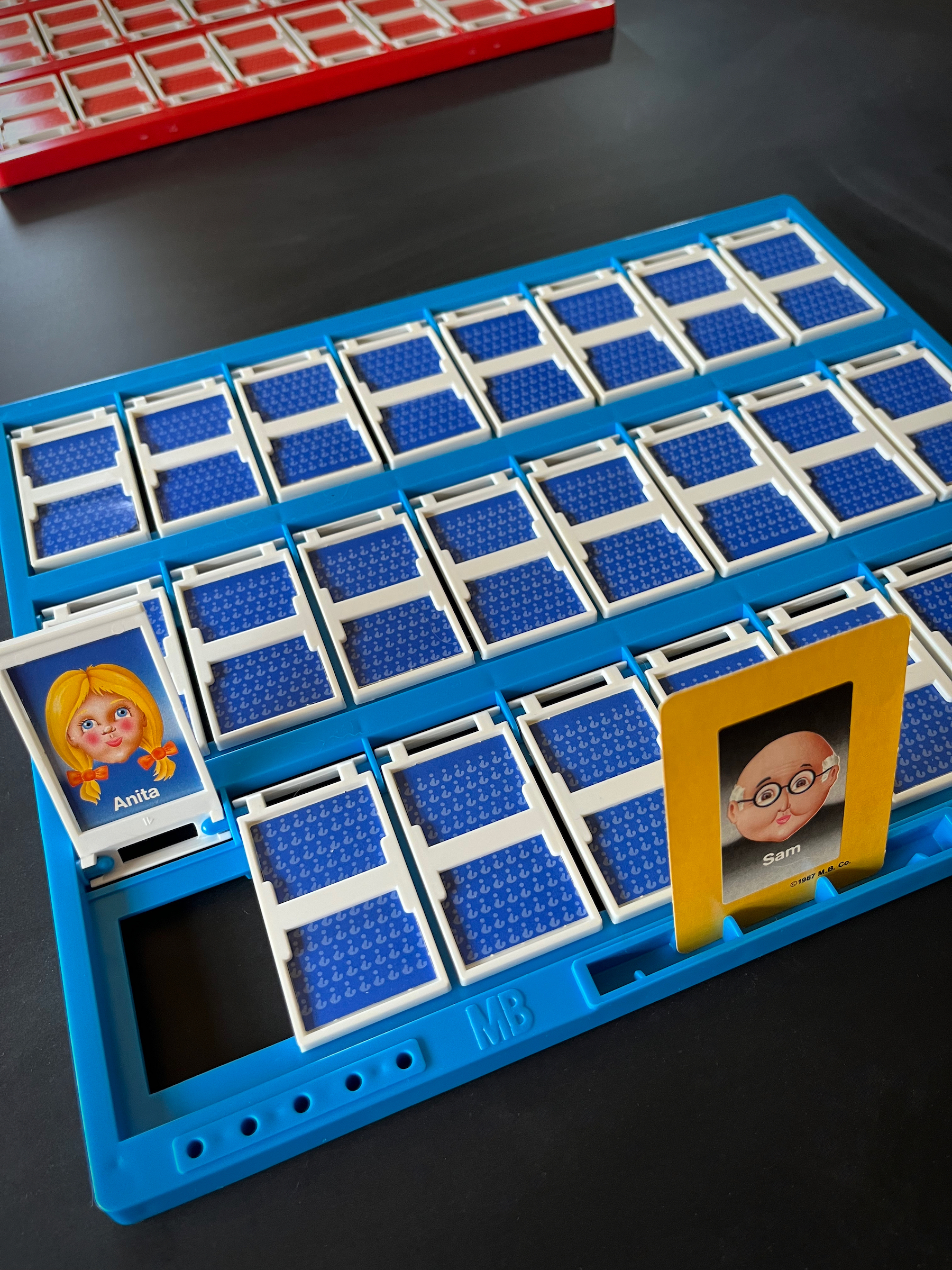
How to Play – Guess Who?

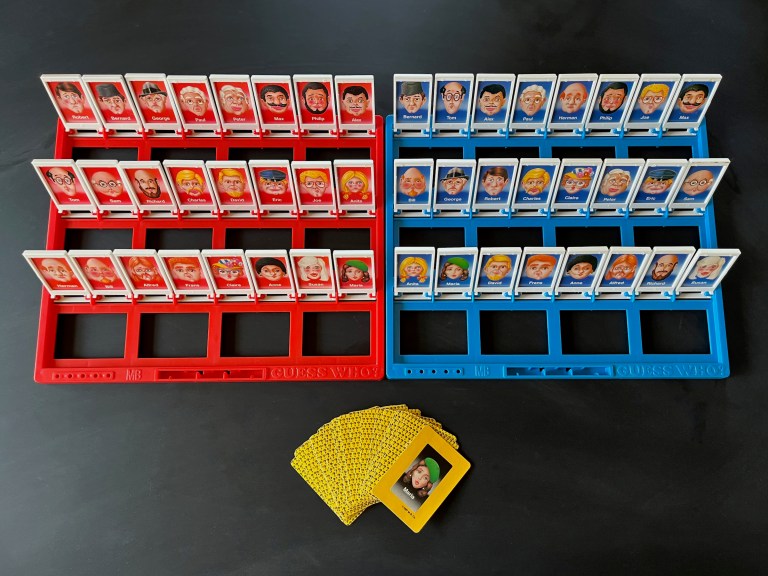
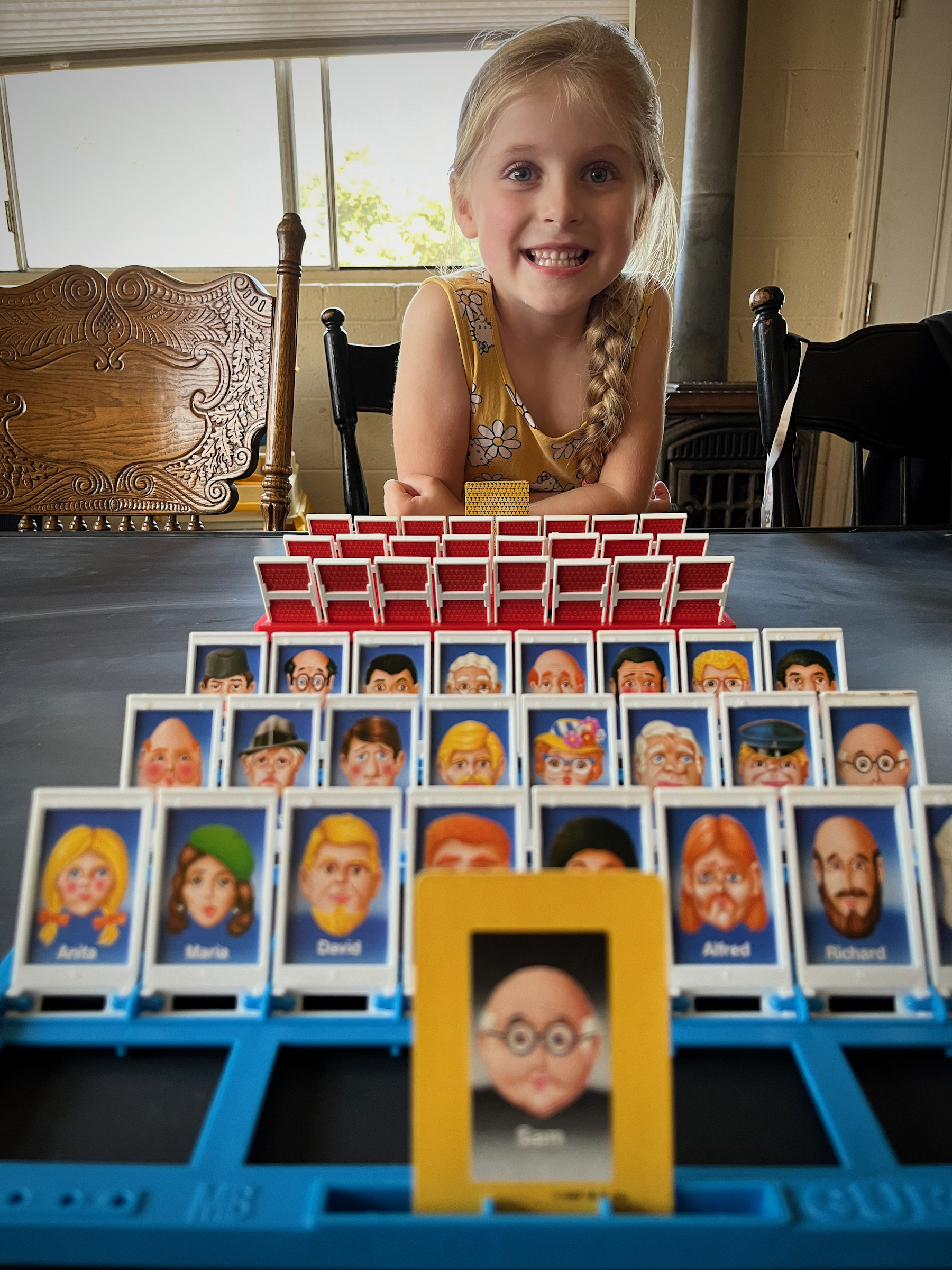
Part of the fun in raising Zoey is finding things that delight and educate her; I want to find fun, creative board games to play with her during our family game nights! This week we played Guess Who? for 2 players!

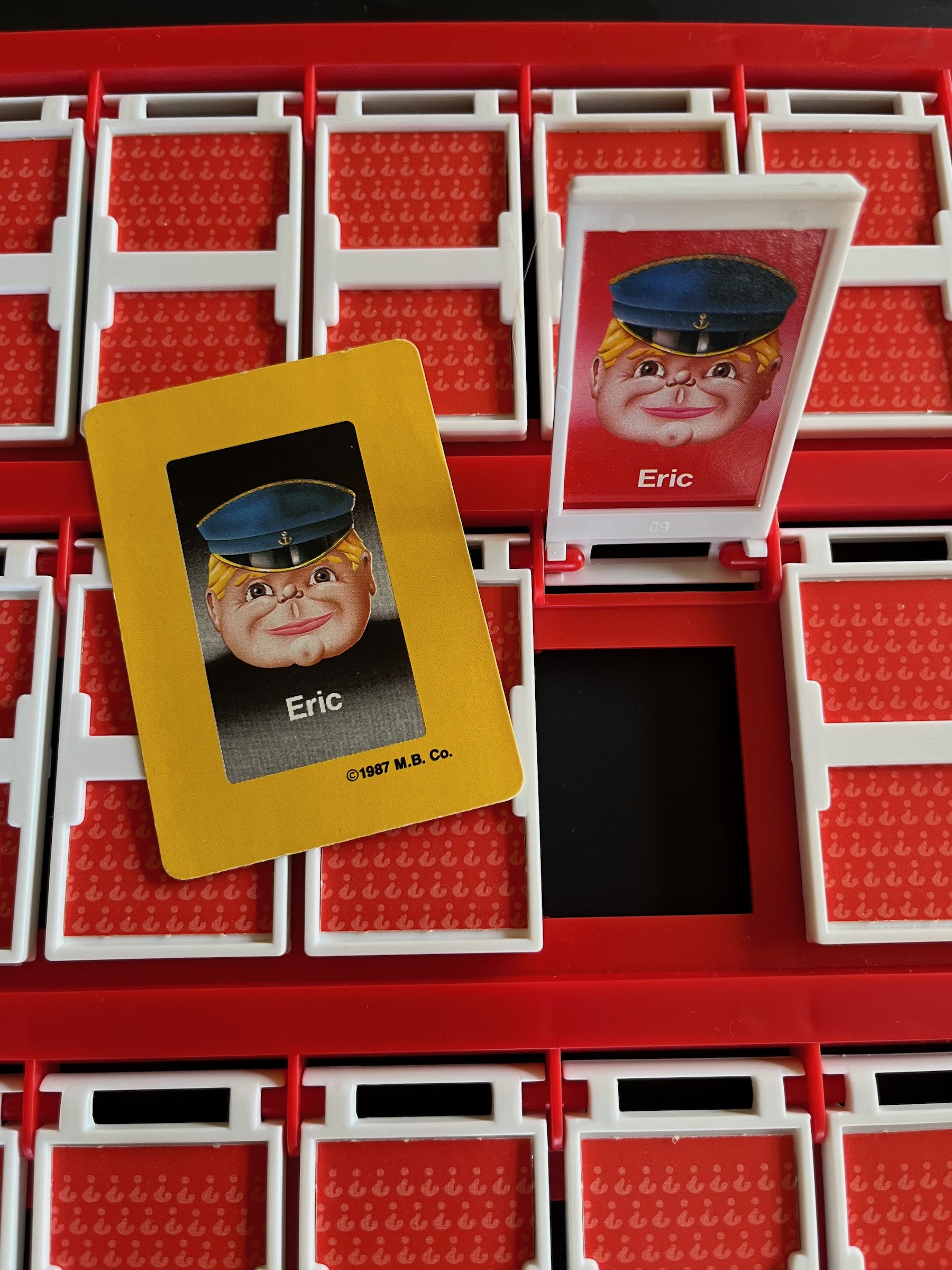
This game was a little tougher for Zoey because she is just learning to read, but she wanted to play and when there’s a will there’s a way! She ended up winning our second game together after she got the hang of asking questions and flipping down faces. She made her guess by asking if he was a ship captain with a name that starts with an “E” (for Eric); she was correct!

So let’s play!

IN THE BOX
  • 2 plastic game boards
  • 48 plastic frames
  • 48 face cards
  • 24 mystery cards
  • Scoring pegs
INSTRUCTIONS
  1. The object of the game is to guess the mystery person on your opponent’s card by asking one question per turn, and eliminating any game board faces that don’t fit the mystery person’s description.
  2. Each player chooses a game board and places it on a flat surface with the mystery card slot facing them.
  3. Both players flip all the frames upright by tipping the game board away from themselves, then settling their game board flat again.
    • Notice the differences among the 24 faces on your game board. Hair, facial hair, eye color, hats and glasses. As you play you’ll notice several other differences among your “suspects”.
  4. Shuffle the mystery cards, then each player chooses one card at random and places it into their mystery card slot so that the mystery person faces you (do not let your opponent see your card)! Set the unused mystery cards aside.
  5. The youngest player always goes first.
  6. Ask your opponent one question per turn and each question must have either a “yes” or “no” answer. 
    • For example, “does your person have white hair?”
  7. After your opponent answers, you may be able to eliminate one or more suspects. 
    • For example, if their mystery person has white hair, flip down all the faces that have black, brown, red and yellow hair. That leaves only the white haired people as suspects after your question.
  8. After you ask a question (and flip down as many faces as you can), your turn is over.
  9. When you’re ready to guess who the mystery person is, make your guess on your turn, instead of asking a question. Don’t use your turn to guess the mystery person until you’re ready! If you guess wrong, you lose the game!
    • To guess the mystery person, say (for example), “The mystery person is Paul.” Your opponent must then tell you whether or not your guess is correct. 
  10. If you guess correctly, or your opponent guesses incorrectly, you win the game!

ENJOY!

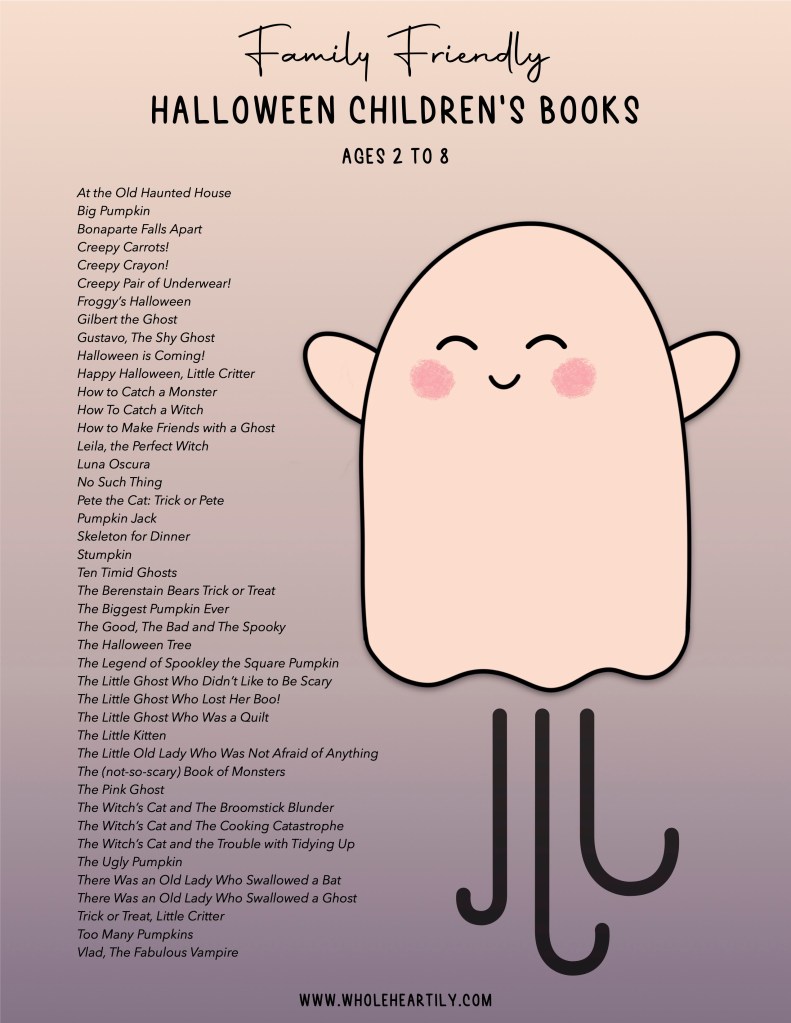
Family Friendly Halloween Children’s Books – Ages 2 to 8

Welcome to the boo-tiful month of October my friends!

To inspire you and your little ones into the Halloween mood, I’ve curated a list of Halloween-themed books for ages 2 to 8! These selections are festive, without frights or scares that could upset a younger audience.

If you’re looking for a list of family friendly halloween children’s books for children under 5 years of age, I’ve created a list for that too! You can find that list here.

If you have a favorite Halloween book for children ages 2 to 8 that you do not see here, please let me know! I would love to add it to this list!

Wholesome Animated Shows for a Younger Audience!

I think we can all agree that there is an overwhelming amount of content out there to consume for all ages, and that a great deal of the content that is made for children can be incredibly stimulating. Now that’s not always a negative, yet I completely understand the necessity for wholesome and less stimulating shows for your little one(s). 

I’ve created a list of wholesome and less stimulating shows for a younger audience. Please let me know if there are any of your family favorite shows I may have missed; I would love to add more as I find them!

Let’s take a look!

DIY – Crocheted Double Pocket Hug

Welcome back friends! Do you crochet? I do! I feel calm and cozy when I’m crocheting, and fiercely proud whenever I complete a project.

My daughter is entering Kindergarten this year and, while I’m sure she’ll love it, I believe she’ll need a little comfort while she’s away. Pocket hugs are a small token that can be tucked into a pocket to remind someone we love that we care for them, even if we’re apart. Zoey carries hers in a pocket of her backpack.

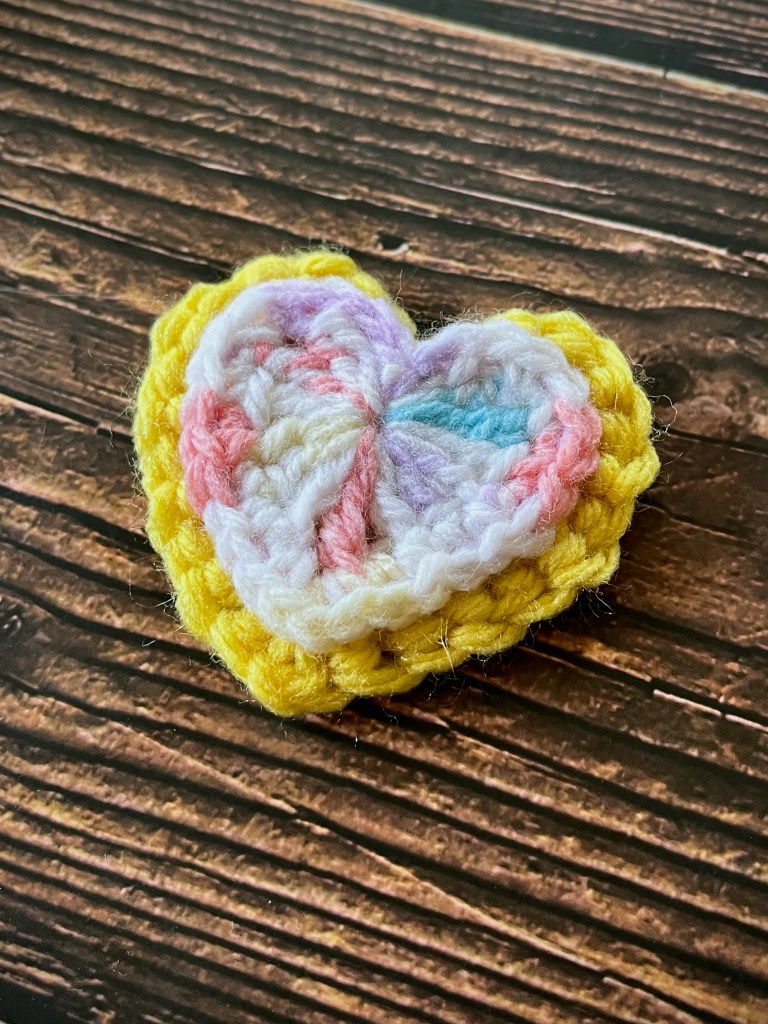
I created two different sized pocket hugs and when I held them together, I admired how much they looked like a cookie with frosting so I had the idea to attach them together. Et voila! Now we have a double pocket hug that looks like a cookie! You could use any color of yarn for this, the possibilities are endless!

Let’s get started!

SUPPLIES
  • Two different crochet hooks (I used sizes 3.75mm and 4.50mm)
  • Two different yarns (I used sizes 2 and 4)
  • Scissors
  • Yarn needle or small crochet hook
  • Hot glue gun
INSTRUCTIONS
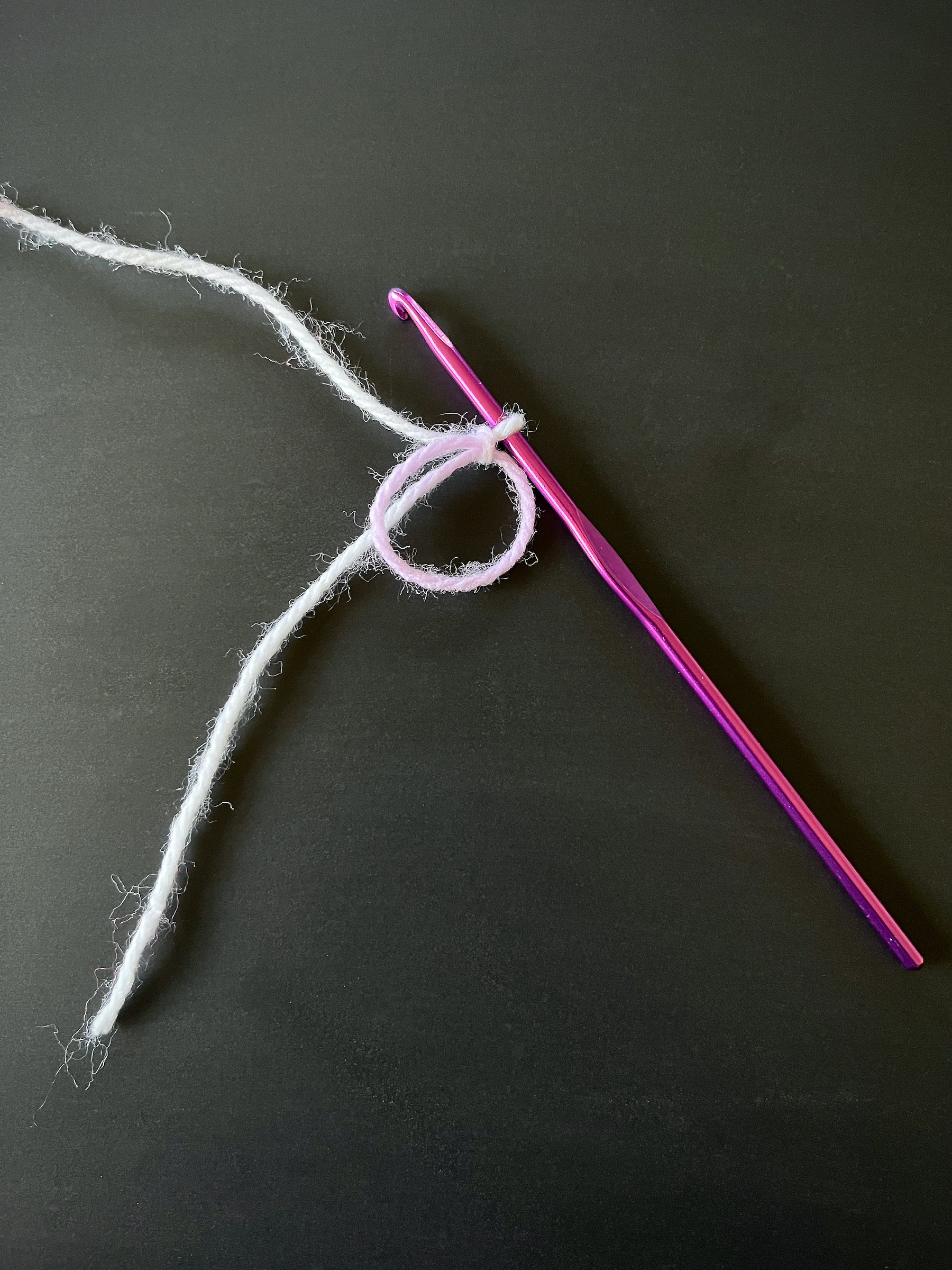
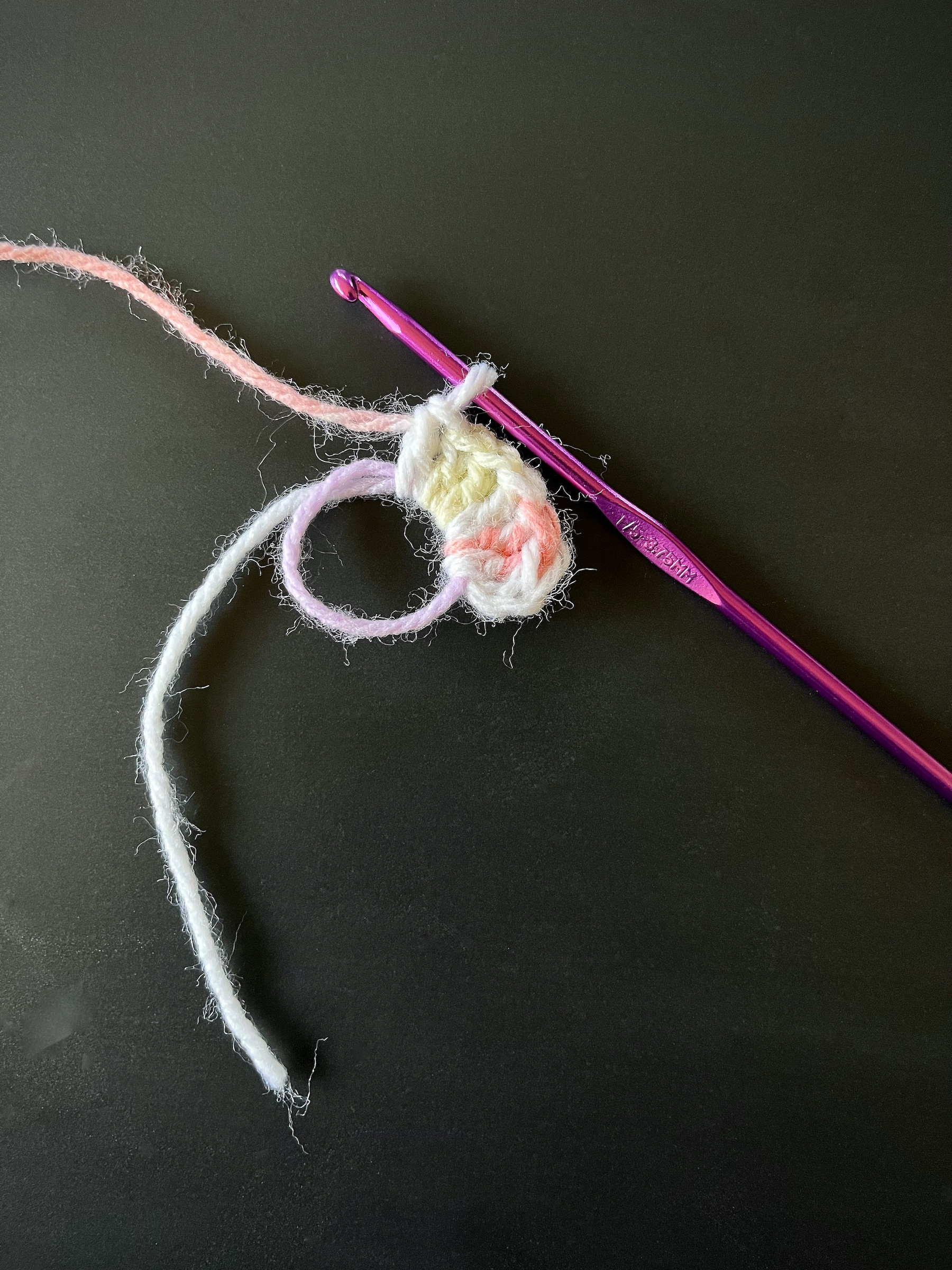
  1. Using the smaller yarn and hook create a magic ring and chain two.
  2. Stitch one triple crochet into the magic ring, then repeat twice more for a total of three triple crochets.
  3. Stitch one double crochet into the magic ring, then repeat twice more for a total of three double crochets.
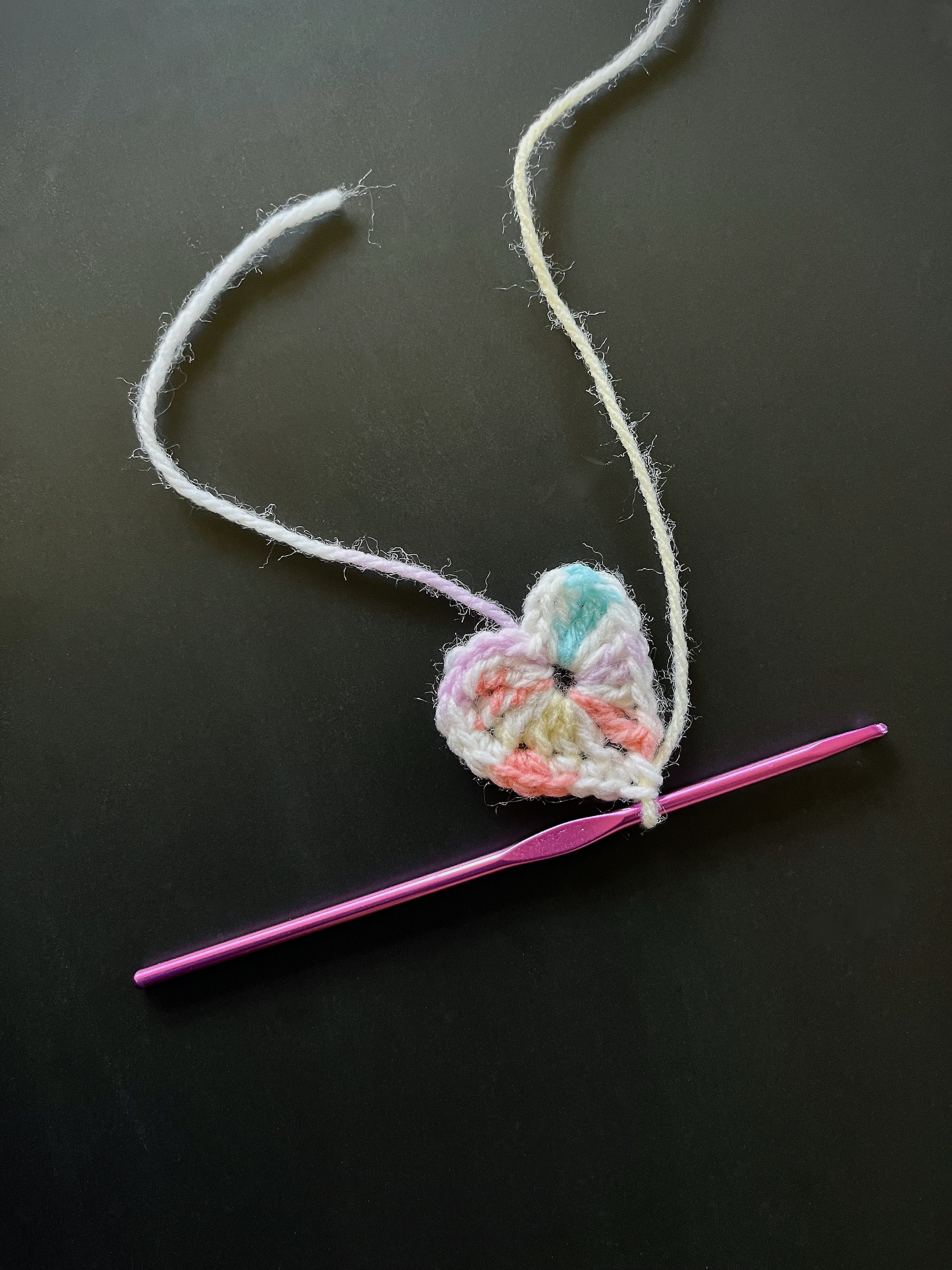
  4. Chain one, then stitch one triple crochet into the magic ring for the heart’s point, then chain one again.
  5. Stitch one double crochet into the magic ring, then repeat twice more for a total of three double crochets.
  6. Stitch one triple crochet into the magic ring, then repeat twice more for a total of three triple crochets.
  7. Chain three and slipstitch into the magic ring.
  8. Slipstitch into the back loop of the beginning three chains of the heart.
  9. Single crochet under both loops of the first triple crochet from the first round, then single crochet again into the same stitch.
  10. Repeat step 9 on the second and third triple crochets of the first round.
  11. Single crochet under both loops of the first double crochet of the first round.
  12. Repeat step 11 on the second and third double crochets of the first round.
  13. Single crochet under the chain.
  14. Single crochet under both loops of the triple crochet, chain one and then single crochet back into the same stitch.
  15. Single crochet under the chain
  16. Single crochet under both loops of the double crochet.
  17. Repeat step 16 on the next two double crochets of the first round.
  18. Single crochet under both loops of the triple crochet from the first round, then single crochet again into the same stitch.
  19. Repeat step 18 on the next two triple crochets of the first round.
  20. Slipstitch into the back loop of the ending three chains of the heart.
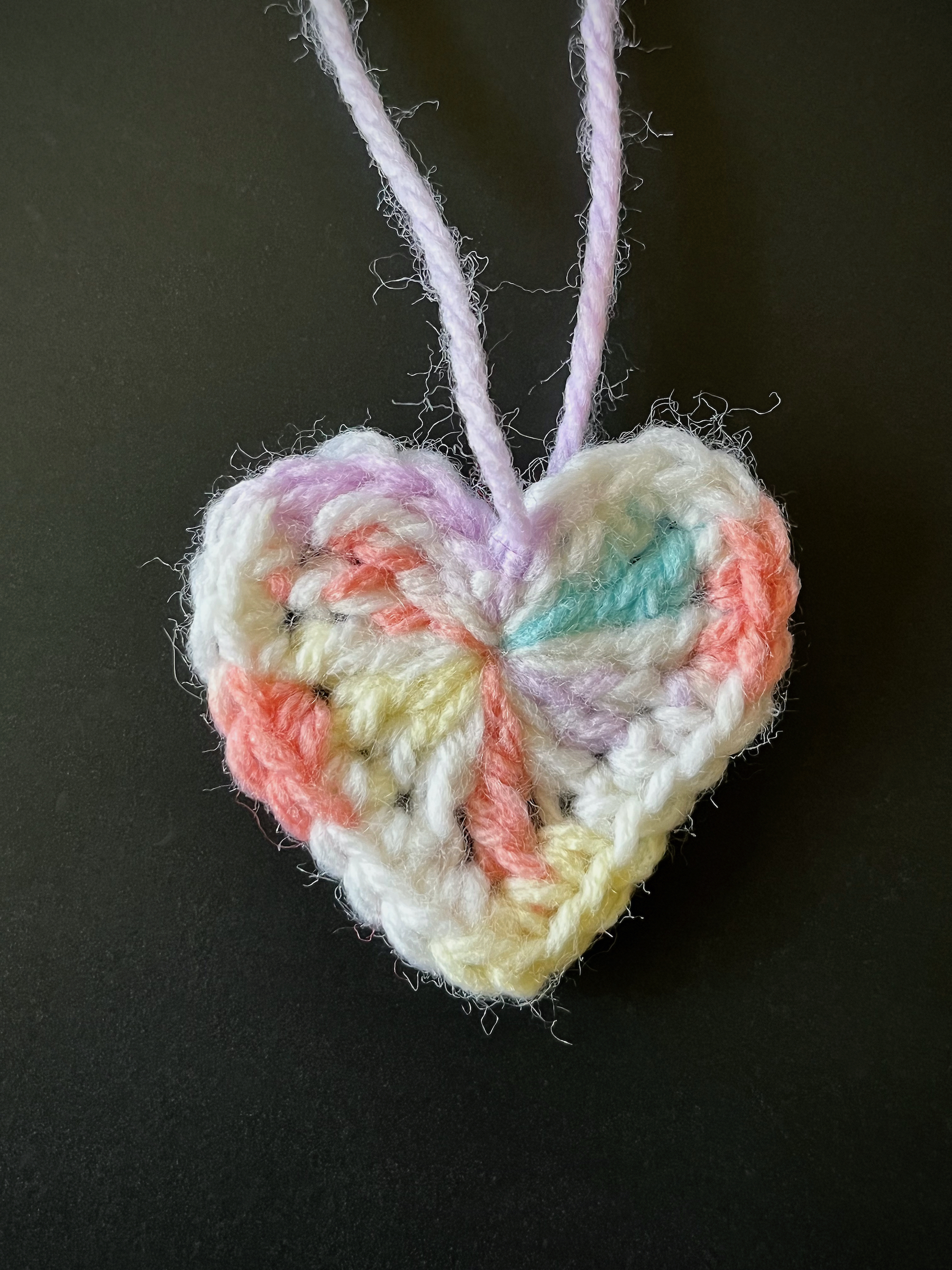
  21. Slipstitch into the magic ring one more time, snip off the yarn and pull the loose end through the final stitch tightly to secure it.
  22. Pull the loose end of the starting yarn to pull the center of the heart in tightly.
  23. Using a smaller crochet hook, weave the starting yarn and ending yarn into the heart.
  24. Repeat steps 1 through 23 again with the larger yarn and hook.
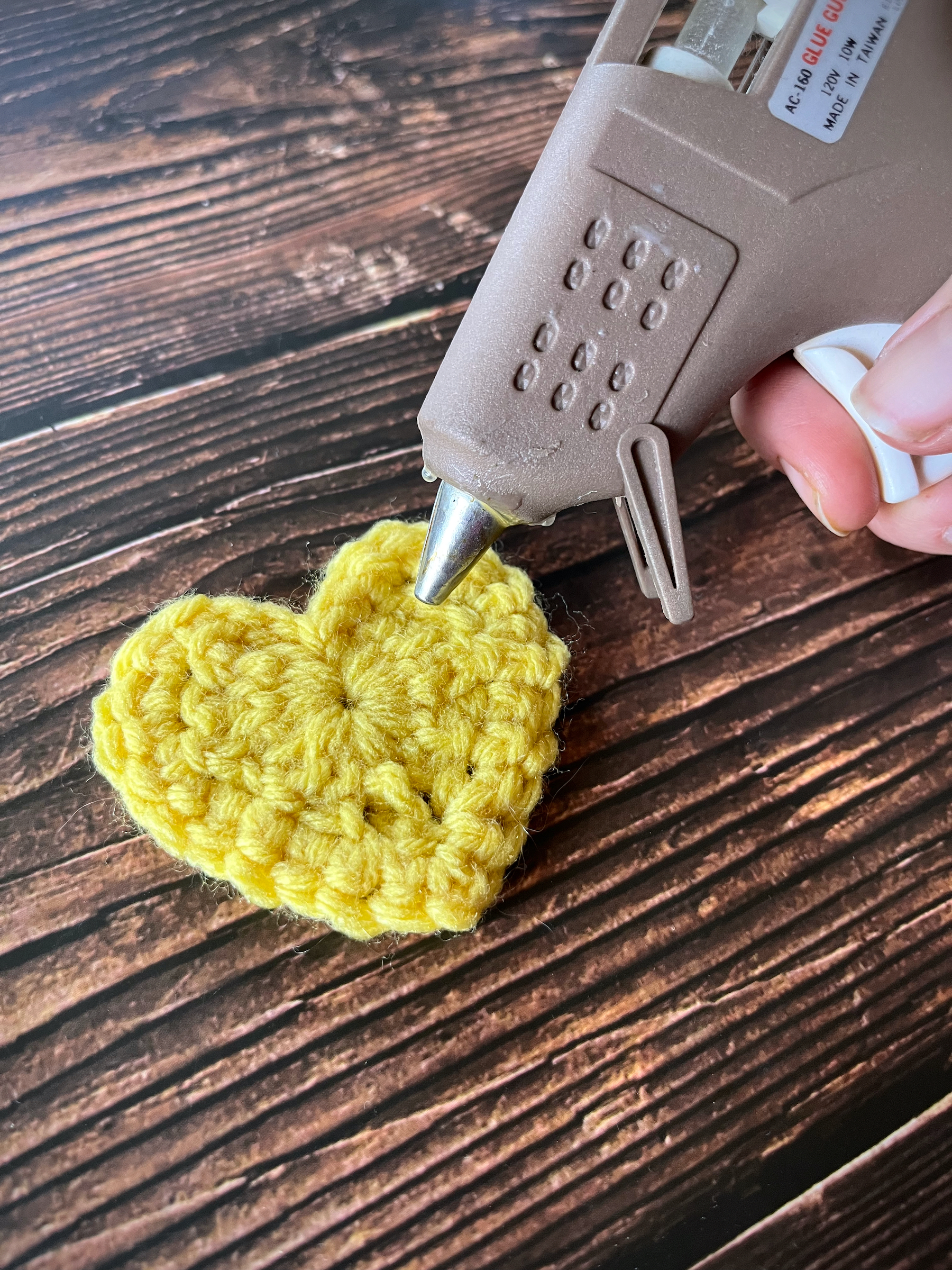
  25. Once both hearts are done, heat up your glue gun and apply a steady amount of glue to the back of the larger heart, within the confines of where the smaller heart will lay, then press the back of the smaller heart to it. If there are any loose edges gently lift them up, apply glue underneath and press it back.
  26. Once cool, give your pocket hug to someone who needs it!