Refurbished Lamp – Inspired by Disneyland’s “Jingles”

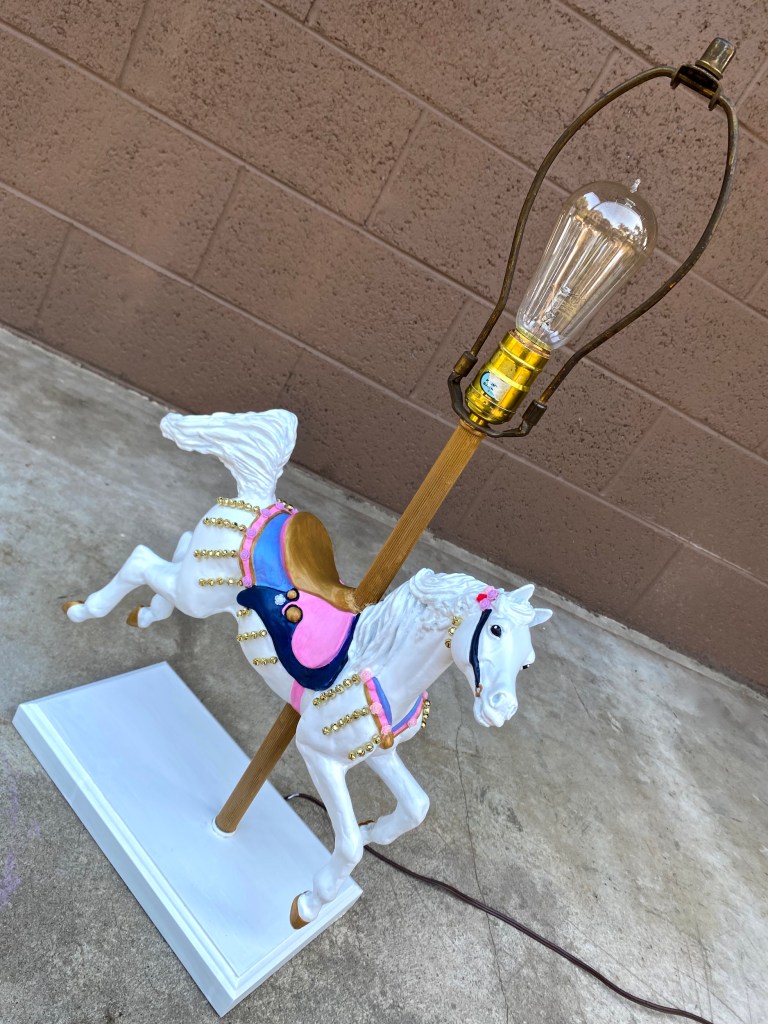
Disneyland is one of my happy places! Is it yours? I’ve always wanted to bring a little bit of the magic into my home by theming one of my rooms after the park and I’m finally getting started! My first piece of the room is a lamp inspired by “Jingles” from King Arthur’s Carousel!

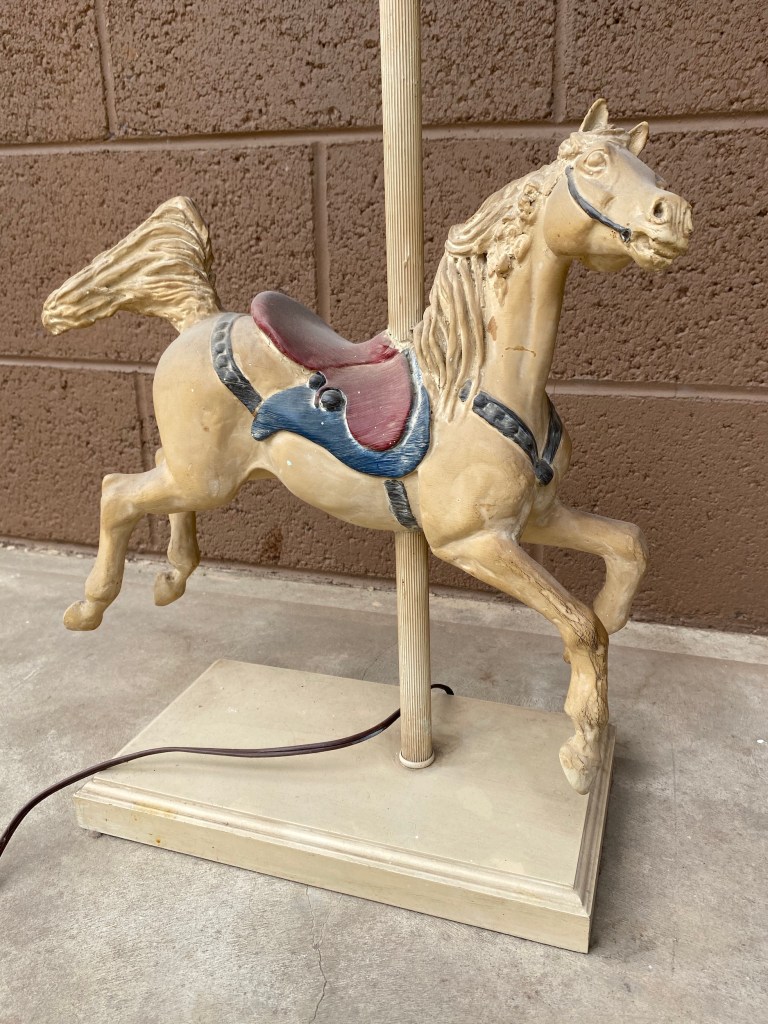
My mom has had this carousel horse lamp for as long as I can remember and when they moved, she offered it to me. I took it, immediately re-imagining it as Jingles. It was a little difficult to get started, since this horse is in a different style and pose, but I took inspiration from the bells, flowers and colors!

Now I know not many people have spare carousel horse lamps lying around, but you’re welcome to follow my instructions if you do, or if you have something else similar that you would like to repaint and/or retheme. Have fun with your imagination!

SUPPLIES
  • Carousel horse lamp
  • Washcloth
  • Rubbing alcohol (optional)
  • Small disposable bags and painters tape
  • Krylon paint and primer spray (white)
  • Sand paper
  • Paint brushes
  • Acrylic paints
  • Hot glue gun with glue inserted
  • 6mm gold jingle bells
  • 8mm acrylic rosettes
  • Varnish
INSTRUCTIONS
  1. Clean the lamp; wipe it down with a damp washcloth, then rubbing alcohol (if needed) and allow the lamp to dry. 
  2. Wrap the cord, and the socket and light fixture up in plastic bags and secure them with painter’s tape.
  3. In a well ventilated area, spray the lamp with the white primer/paint. I am still getting the hang of spray painting, so if you’re like me and drips or bubbles form, wait for the lamp to completely dry then lightly sand out the rough parts. Wipe the lamp down with a damp washcloth and allow it to dry, then try again. I finished with brushing on white acrylic paint.
  4. Once you’re satisfied with the white coat and it’s dry, paint the saddle, bridle, eyes, hooves, pole and base. This may take more than one coat so be patient and allow them to dry in between each application.
  5. Once the paint is dry, paint or spray the lamp with a varnish. The finish is based on preference, I used matte, but you can up the gloss if you want!
  6. Once the varnish is dry, use the hot glue gun to glue roses along the bridle and anywhere else you prefer.
  7. Trace light pencil guidelines where you want the jingle bells to be, then attach them with hot glue.
  8. Insert a light bulb of your choice and enjoy!

DIY Disney Decoupage Drink Coasters

Do you still have a VCR? Not many people have VCRs anymore. We do, although we don’t use it often.

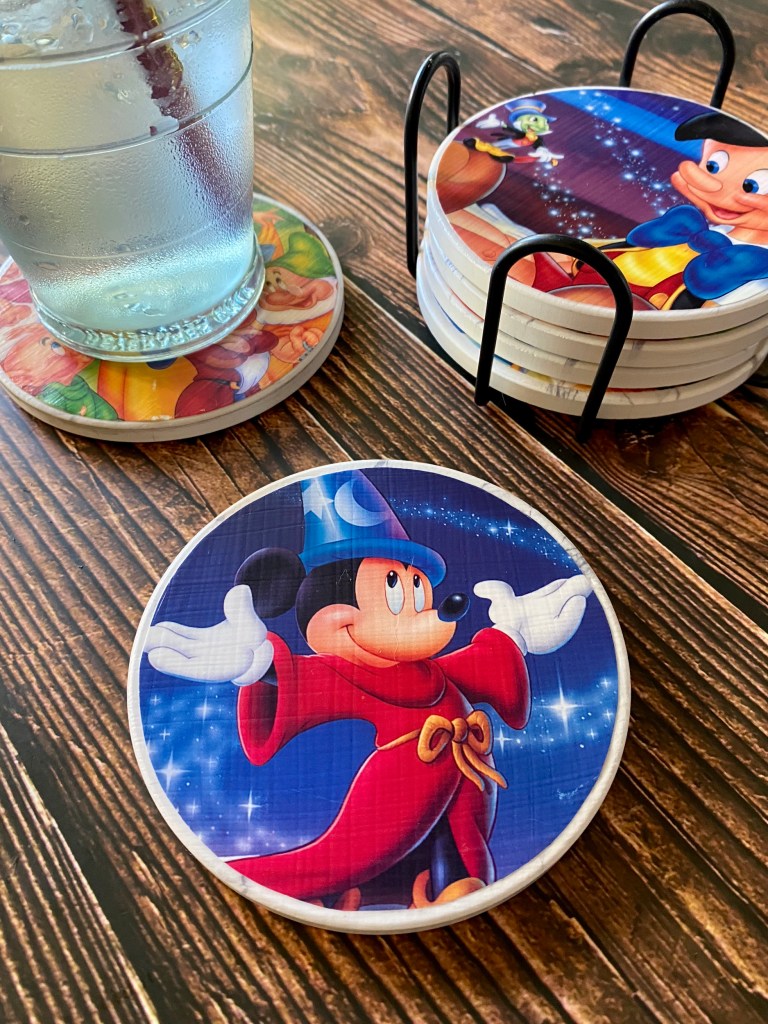
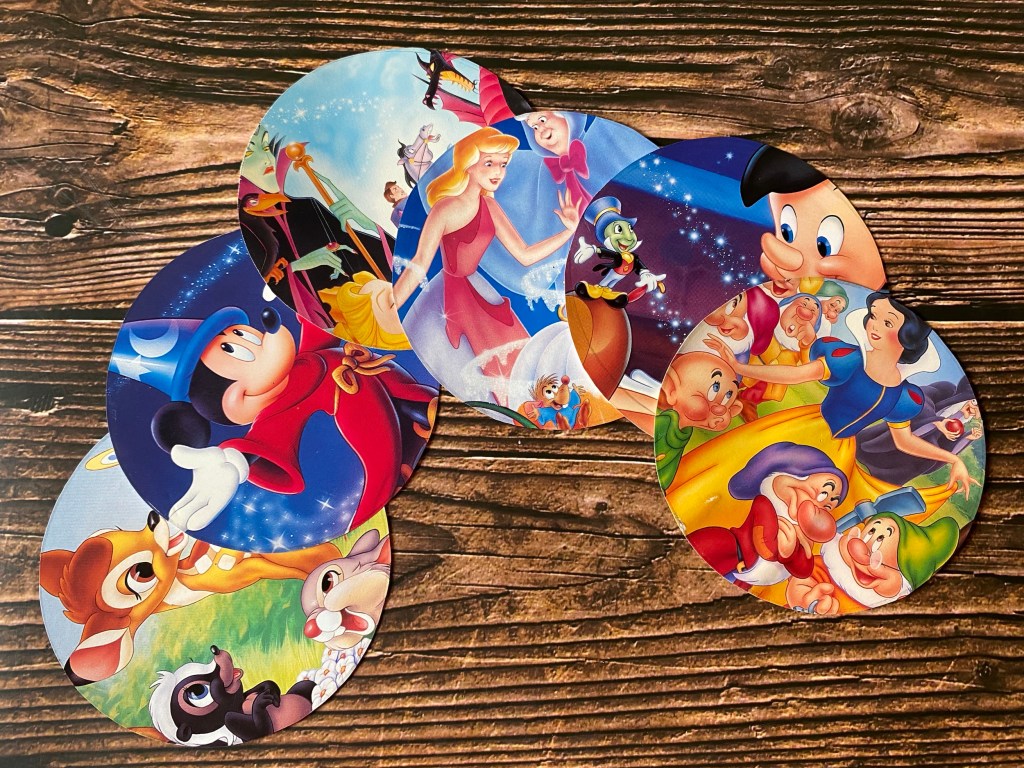
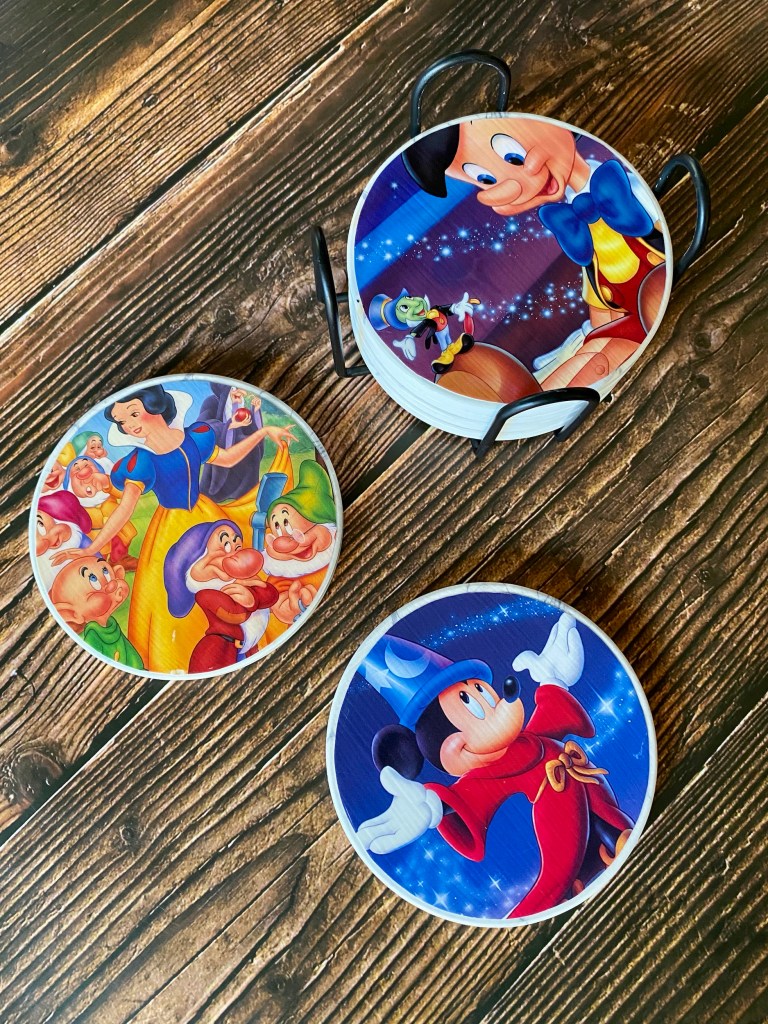
If you don’t have a VCR anymore, what should you do with all your old VHS, including all those Disney films you grew up with? You could collect them, donate them, or recycle them. But wait! If you decide to recycle them, let’s remove the beautiful cover art and use it to make some drink coasters!

SUPPLIES
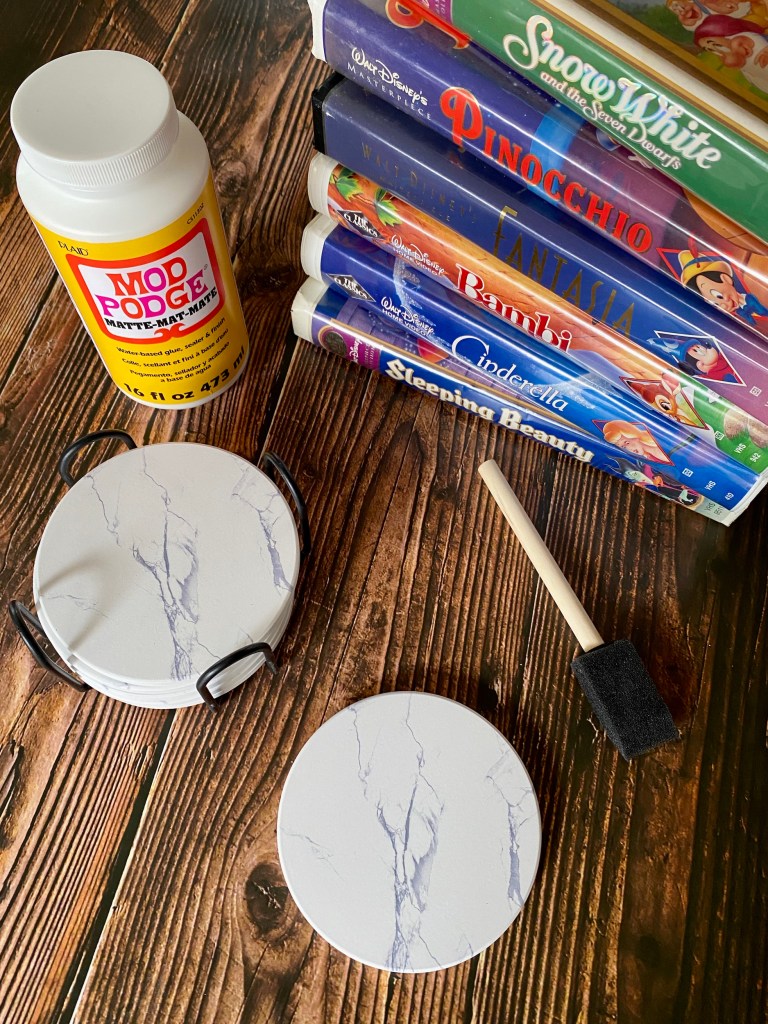
  • Disney VHS cover art
  • A “pair of compasses” tool
  • Scissors
  • An eraser
  • Ceramic coasters with cork bases
  • Mod Podge
  • A foam paintbrush
INSTRUCTIONS
  1. Clean the coasters; wipe them down with a damp washcloth and allow them to dry.
  2. Remove the cover art from the VHS cases and, using a pair of compasses tool, trace circles that are slightly smaller in diameter than the diameter of the coasters.
  3. Carefully cut out the circles and erase any leftover pencil markings.
  4. Using a foam paintbrush, paint a layer of Mod Podge onto a coaster, then carefully place one of the cutouts onto the center, smoothing away any wrinkles or bubbles.
  5. Brush another layer of Mod Podge over the top of the artwork on the coaster in one direction (it will dry clear, but you will be able to see the texture once dry). 
  6. Repeat steps 4 and 5 on each coaster and allow them all to fully dry.
  7. Once dry, turn each coaster perpendicular to the original brushstroke and paint another layer of Mod Podge over the top so a crosshatch texture is formed when dry.
  8. Allow this final layer to completely dry and you’re ready to use your own personal Disney coasters!

Bob’s Burgers BUJO – May Spreads

Bob's Burgers Tina May Spread

I’ve been keeping my eyes open for a Bob’s Burgers planner, but I have yet to find one, I’ve decided to make my own!

I have been admiring bullet journals for the past year, and attempted my own, but hit a wall with how complex I was trying to make them. This is technically my first bullet journal so please bear with me as I learn what works and what doesn’t.

Each month will be themed for a different character or idea and this month is Tina themed! Check out my past month’s themes:

For May’s weekly spreads, I decided to start with Tina’s “Everything’s OK” face. Tina is (for the most part) a rule-follower like myself and has a really hard time lying and/or hiding her emotions when she knows something’s wrong.

Bob's Burgers Tina May Spread

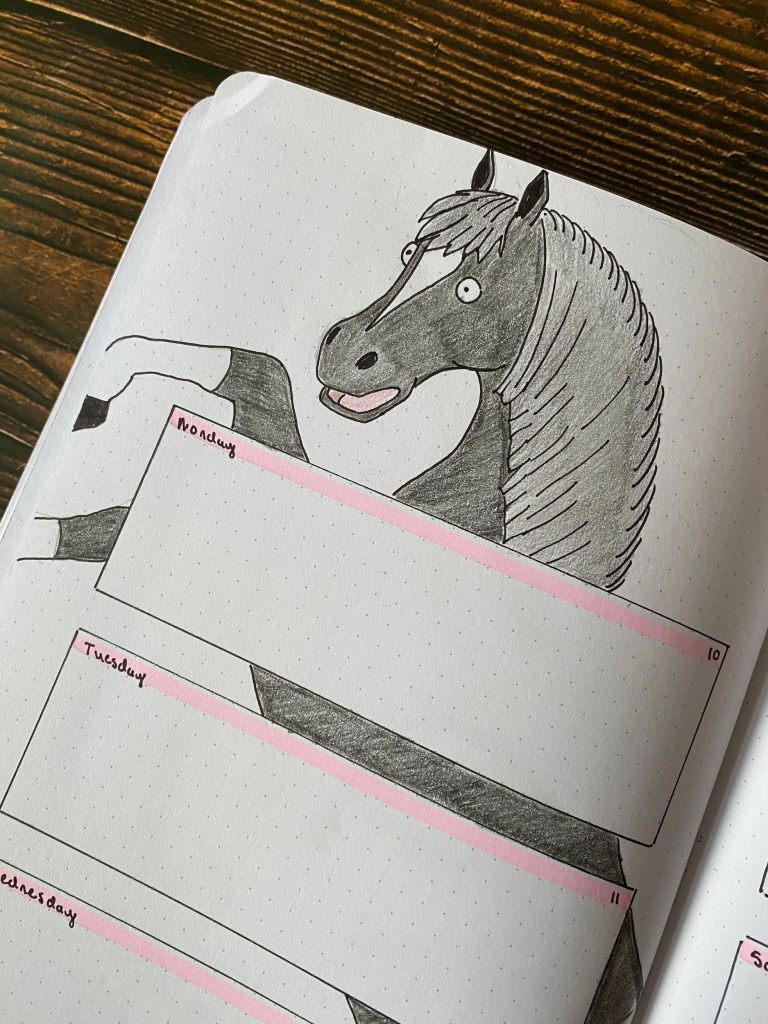
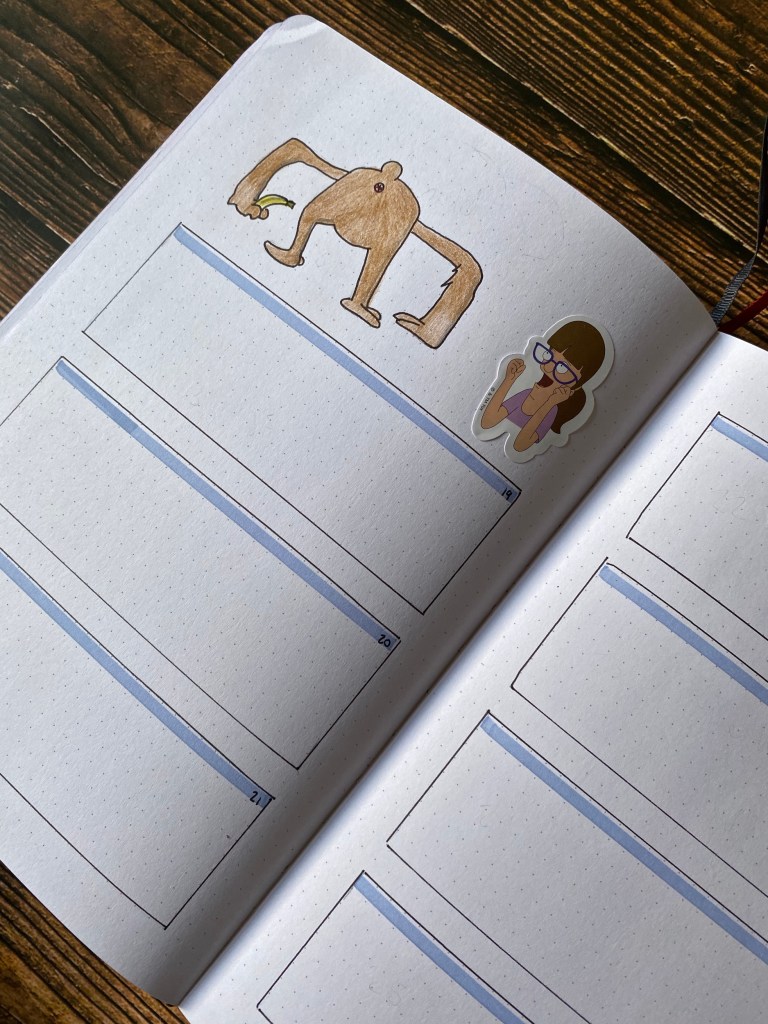
I couldn’t do a Tina theme without any horses and one of the most memorable horses in the series is Tina’s imaginary horse Jericho (voiced by Paul Rudd) from the “The Horse Rider-er” episode.

Bob's Burgers Tina May Spread

Checking out all the butts!

Bob's Burgers Tina May Spread

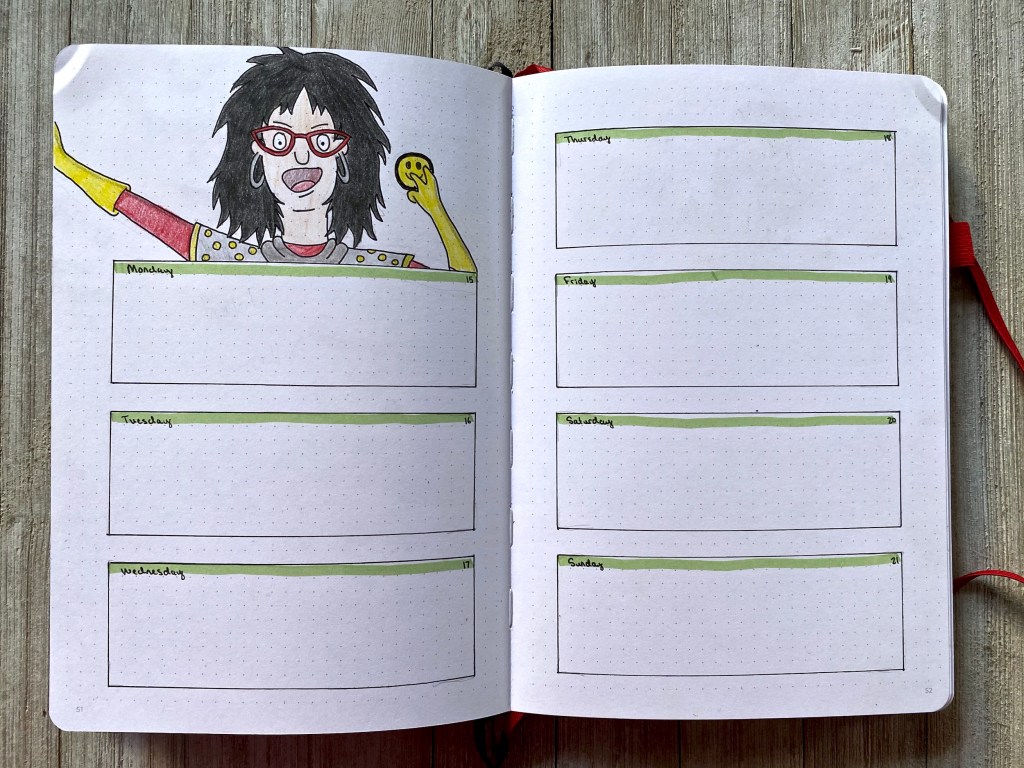
And last but not least, one of my favorite moments is when Tina raises her literal (eye)glasses during a toast in “An Indecent Thanksgiving Proposal”.

Check back next month for a Teddy themed spread!

Bob’s Burgers BUJO – April Spreads

I’ve been keeping my eyes open for a Bob’s Burgers planner, but I have yet to find one, I’ve decided to make my own!

I have been admiring bullet journals for the past year, and attempted my own, but hit a wall with how complex I was trying to make them. This is technically my first bullet journal so please bear with me as I learn what works and what doesn’t.

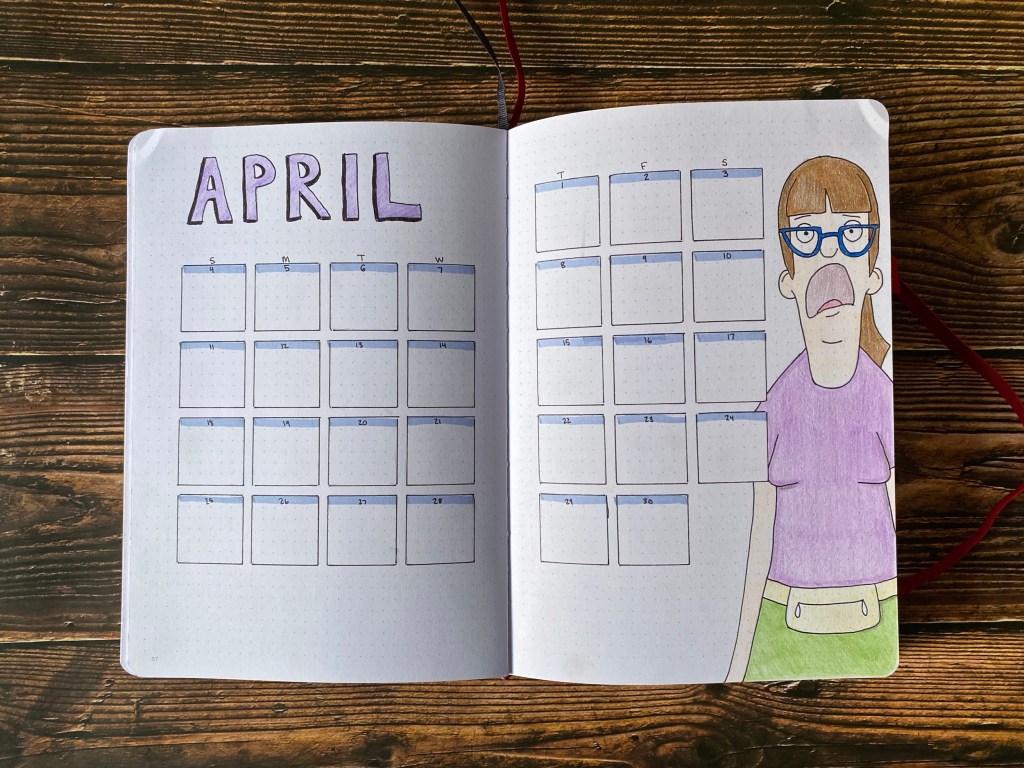
Each month will be themed for a different character or idea and this month is Gayle themed! Check out my past month’s themes:

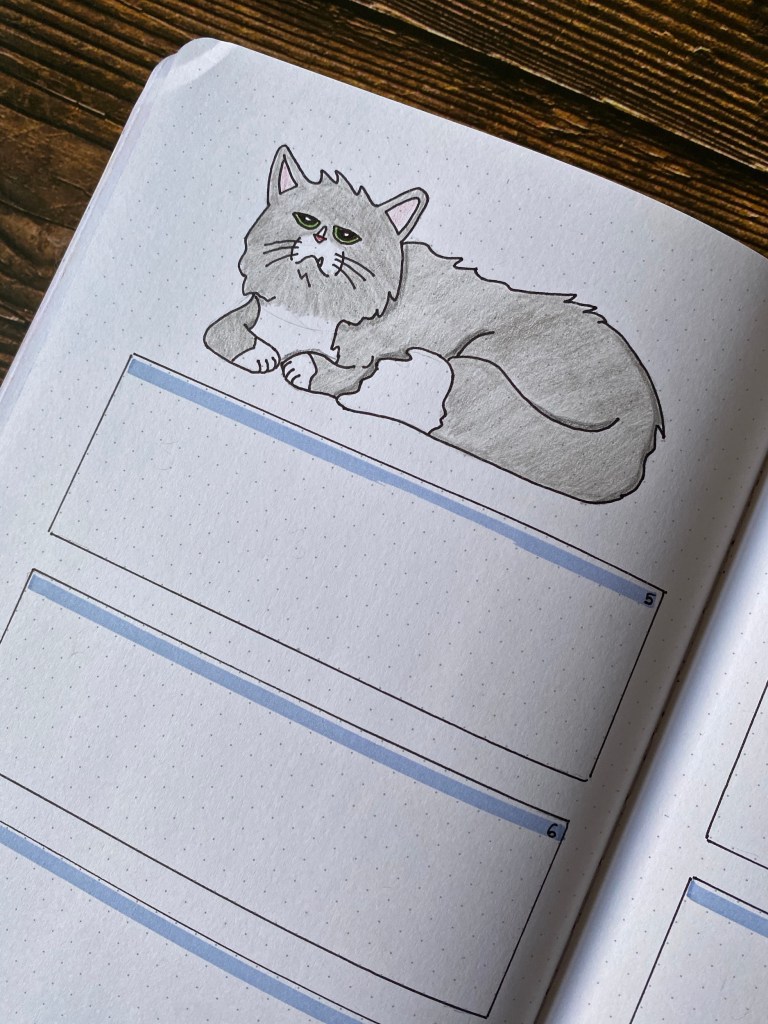
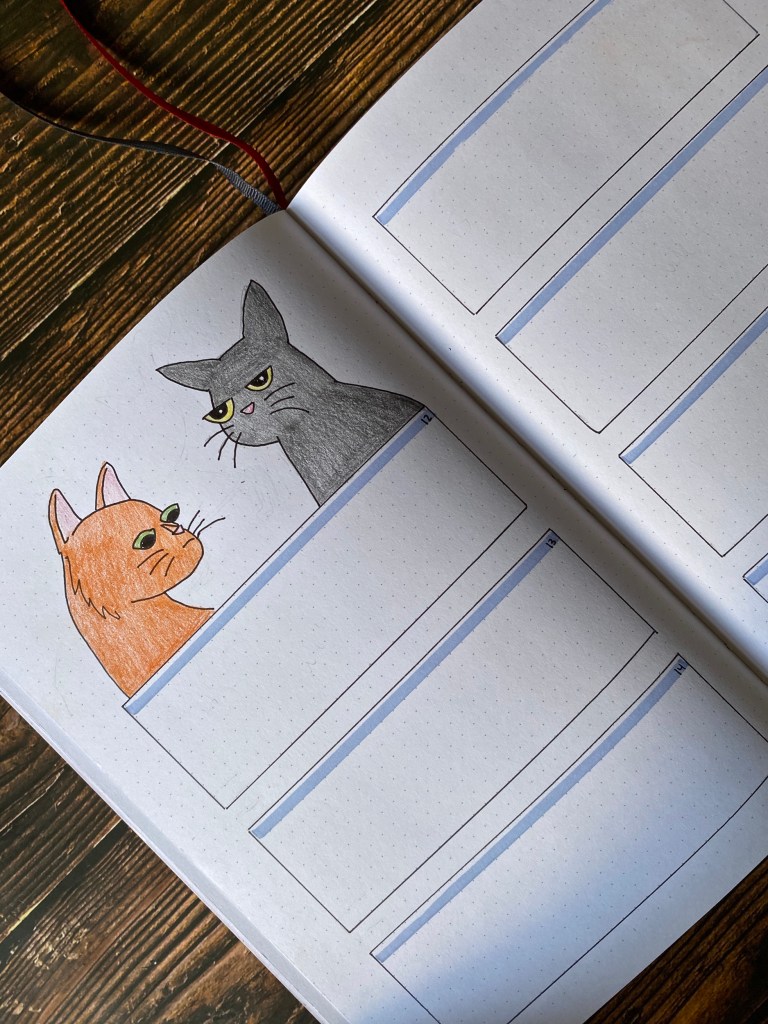
For the April weekly spreads, I decided to start with Gayle’s cats. Poor Gayle is mostly a hot mess, but she has many redeeming moments and her cats mean the world to her. I started with Mr. Business, who definitely demands his own weekly spread, and followed him with Pinkeye and Jean Paw’d Van Damme.

One of Gayle’s most iconic moments I had to include is in the episode “Art Crawl” when she feels the universe is telling her create paintings of animal butts and display them in the restaurant during the local Art festival.

Check back next month for a Tina themed spread!

How to dye Easter eggs with food coloring!

Dyeing Easter Eggs with Food Coloring

I had every intention of making naturally dyed eggs this year. Every. Intention. Then I realized I did not leave myself enough time to prepare and create the dyes. Going natural is a labor of love that I would still love to do…next year.

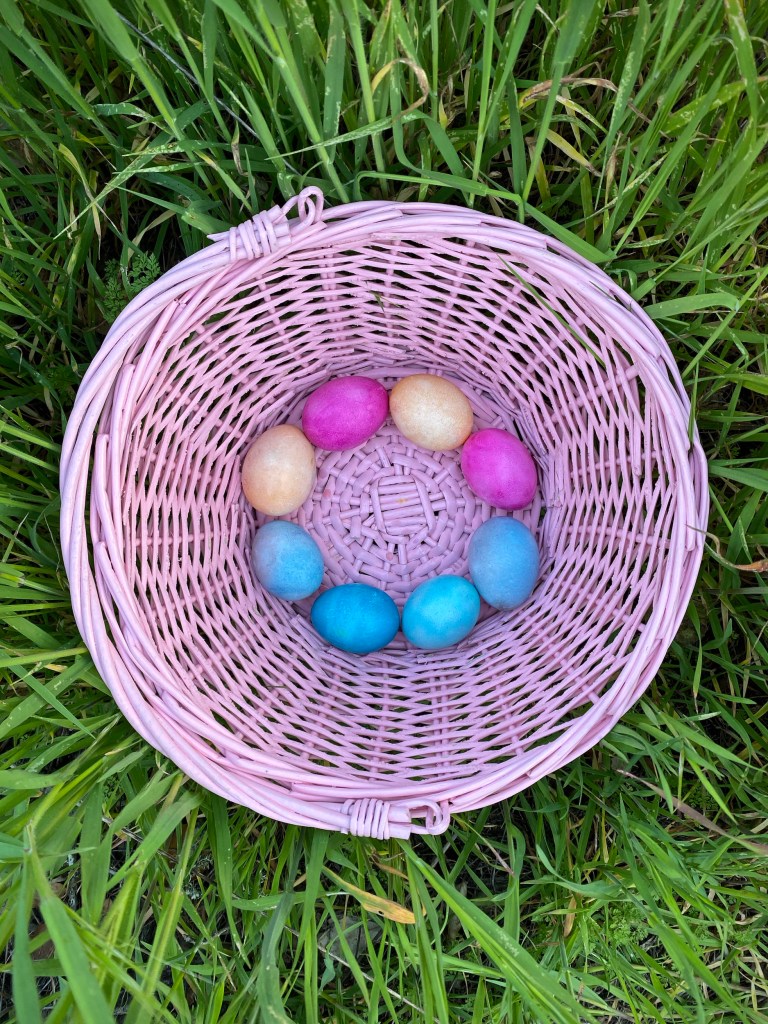
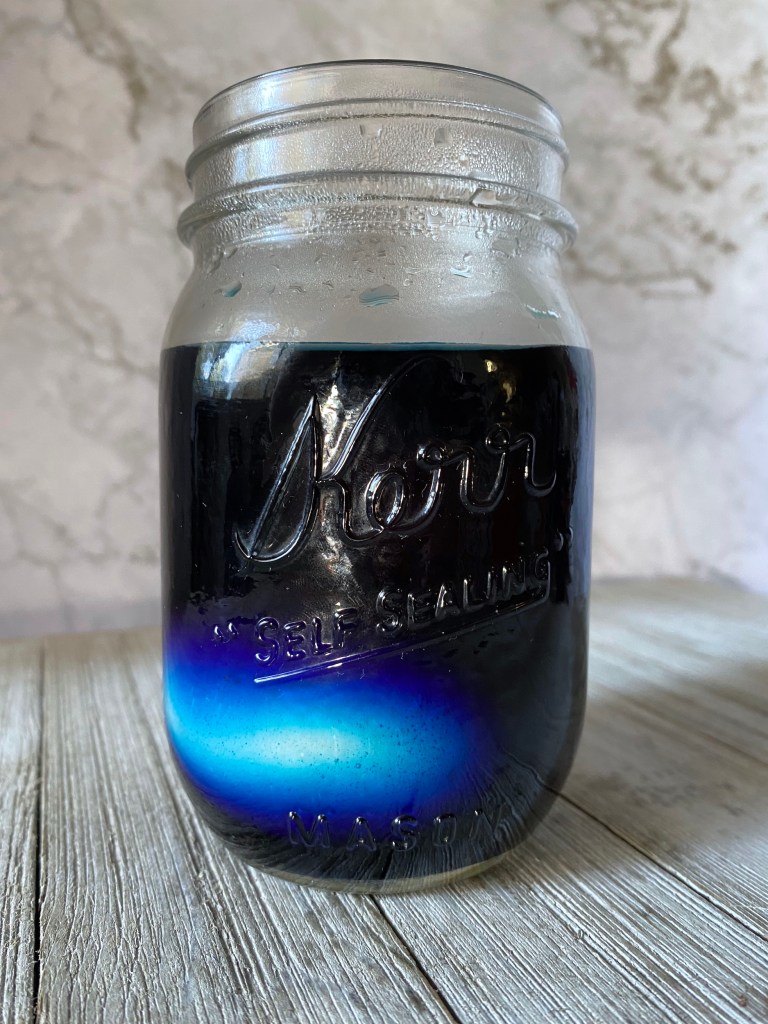
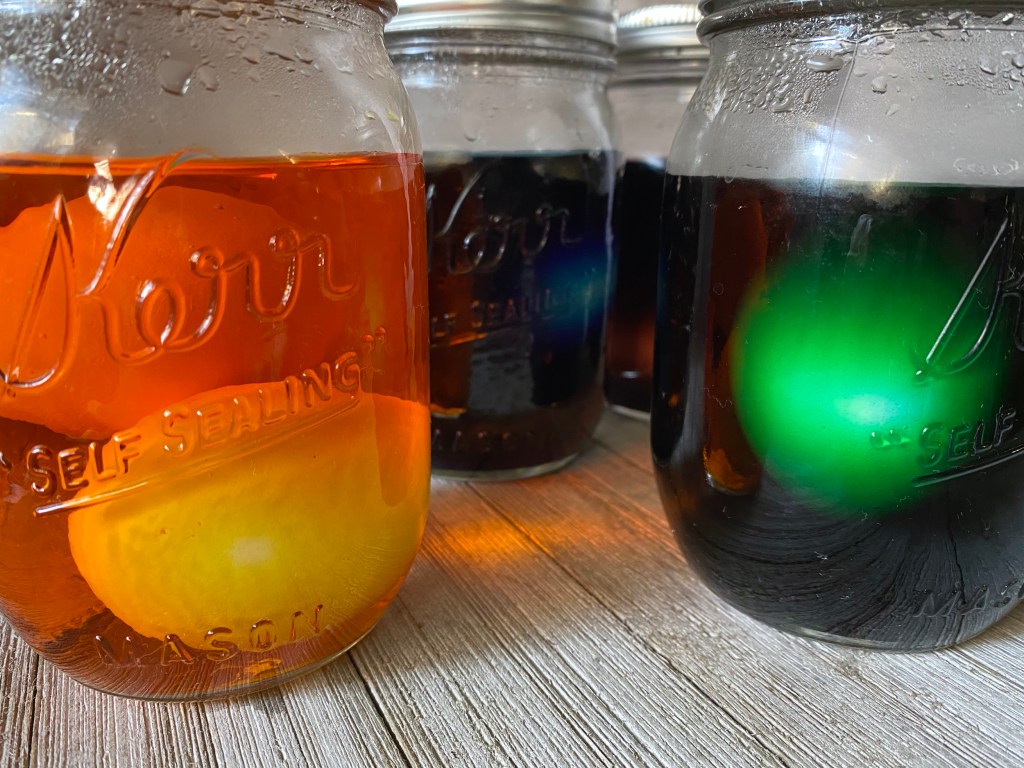
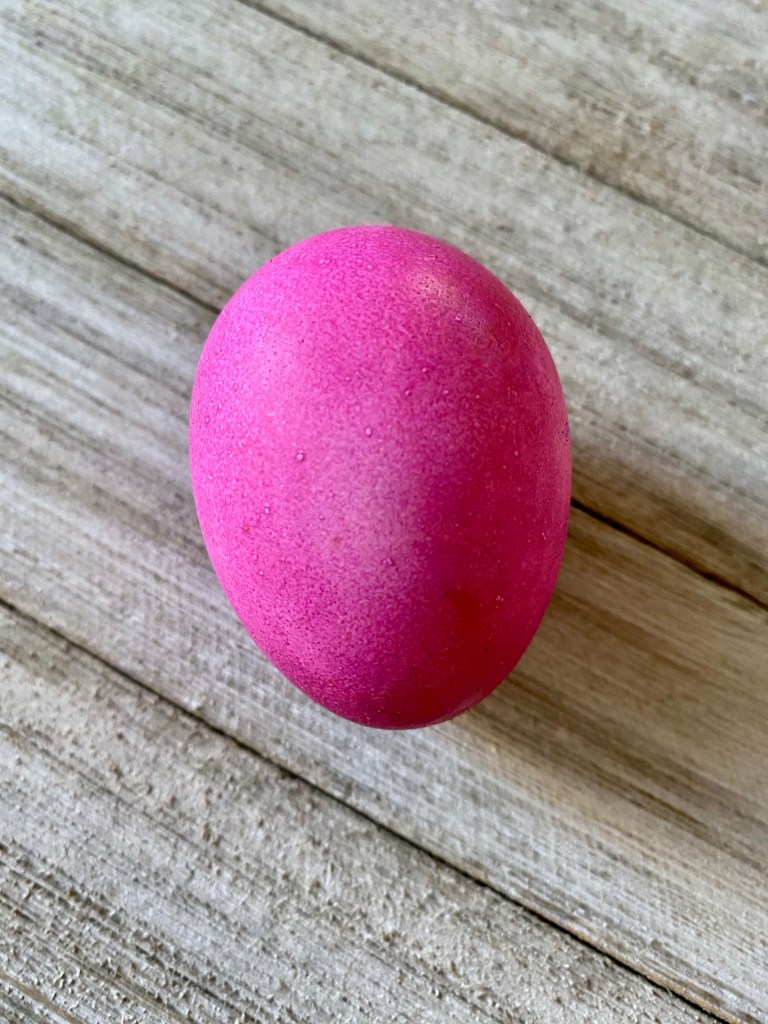
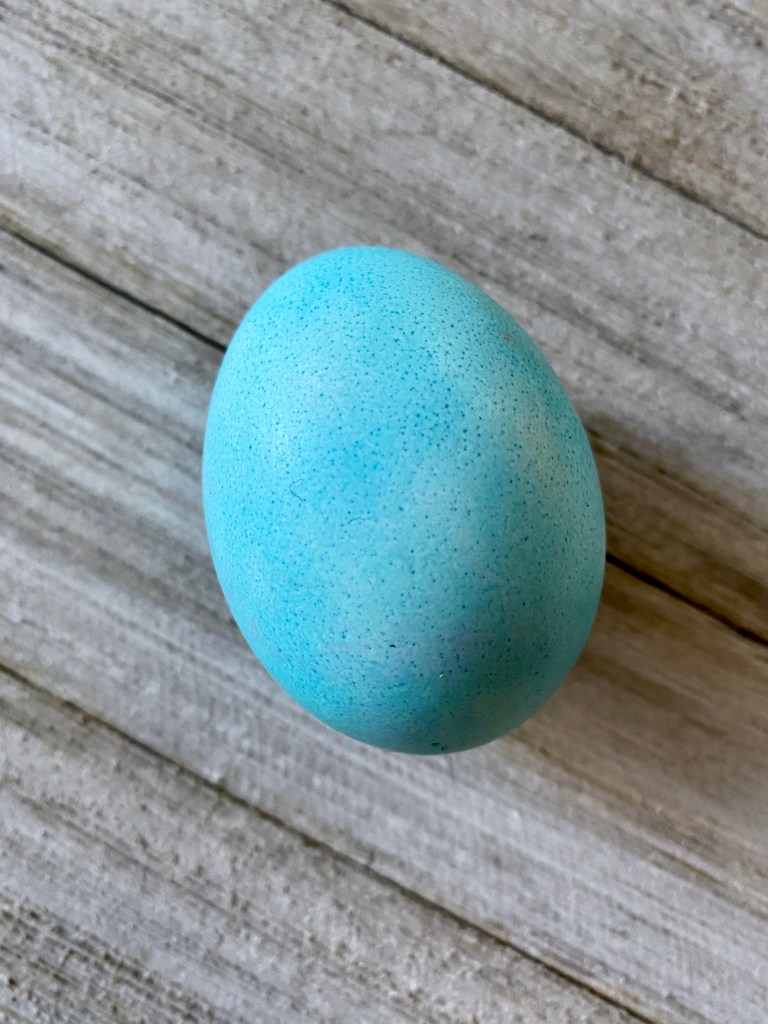
This year, I dyed a small amount of eggs using food coloring, vinegar and water. It was a lot quicker, a lot simpler, and I was pretty happy with the results!

Dyeing Easter Eggs with Food Coloring
SUPPLIES
  • 4 16 ounce mason jars
  • 8 teaspoons of vinegar (2 for each color/jar)
  • 4 cups of water (1 for each color/jar)
  • Food coloring of your choice
  • 8 hard boiled eggs
INSTRUCTIONS
  1. Prepare each mason jar by adding two teaspoons of vinegar to each one.
  2. Boil the four cups of water and carefully pour one cup into each mason jar.
  3. Add drops of food coloring to create the desired shade (don’t be afraid to add a lot, I used 40 drops of blue in one jar) and stir until the color, vinegar and water are well incorporated.
  4. Gently add two eggs to each color, allow the the water to cool slightly, then seal the lids and put them in the refrigerator overnight.
  5. Remove the mason jars from the refrigerator and carefully remove the eggs from the dye, then drain the rest.
  6. Rinse the eggs, gently rubbing with your fingers to remove the darker colored film covering the eggs.
  7. Gently pat the eggs dry with paper towels.

I used the mason jars I had available, which were 16 ounces with regular mouths. I dyed two eggs within each jar; I probably could have crammed 3 eggs into each jar, but I didn’t think that would have given them an even coating of the dye. Please feel free to multiply the recipe and enjoy!
Bob’s Burgers BUJO – March Spreads

Bob's Burgers BUJO for March with Linda

I’ve been keeping my eyes open for a Bob’s Burgers planner, but I have yet to find one, I’ve decided to make my own!

I have been admiring bullet journals for the past year, and attempted my own, but hit a wall with how complex I was trying to make them. This is technically my first bullet journal so please bear with me as I learn what works and what doesn’t.

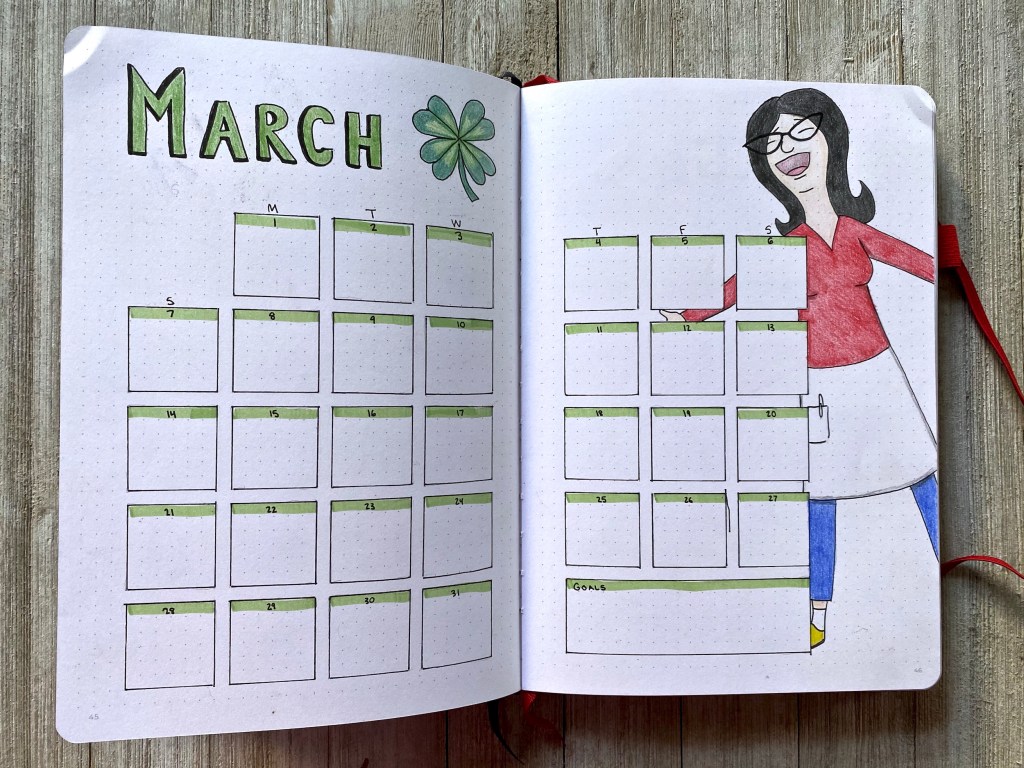
Each month will be themed for a different character or idea! I started with Bob for January, Valentine’s episodes for February and March is for Linda. I tried to hand draw some more pieces this month instead of using mostly stickers.

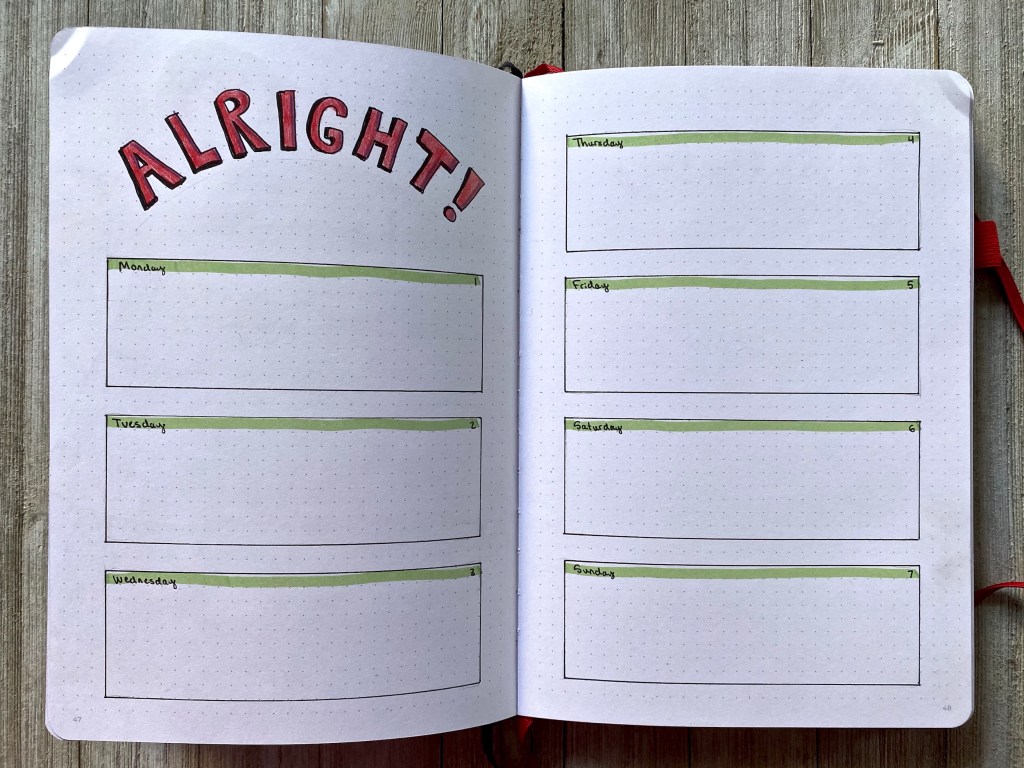
For the March weekly spreads, I decided to draw small snapshots that remind me of Linda. The first snapshot is what I would consider Linda’s catchphrase. I see her as such a positive force in the family that’s always willing to try new things and get out there! Alllllright!

Bob's Burgers BUJO for March with Linda

The second snapshot is from the episode “Friends with Burger-fits”. Linda and the kids run a Thunderdome-inspired wrestling league and I love how Linda dresses up and gets so into playing with her kids.

Bob's Burgers BUJO for March with Linda

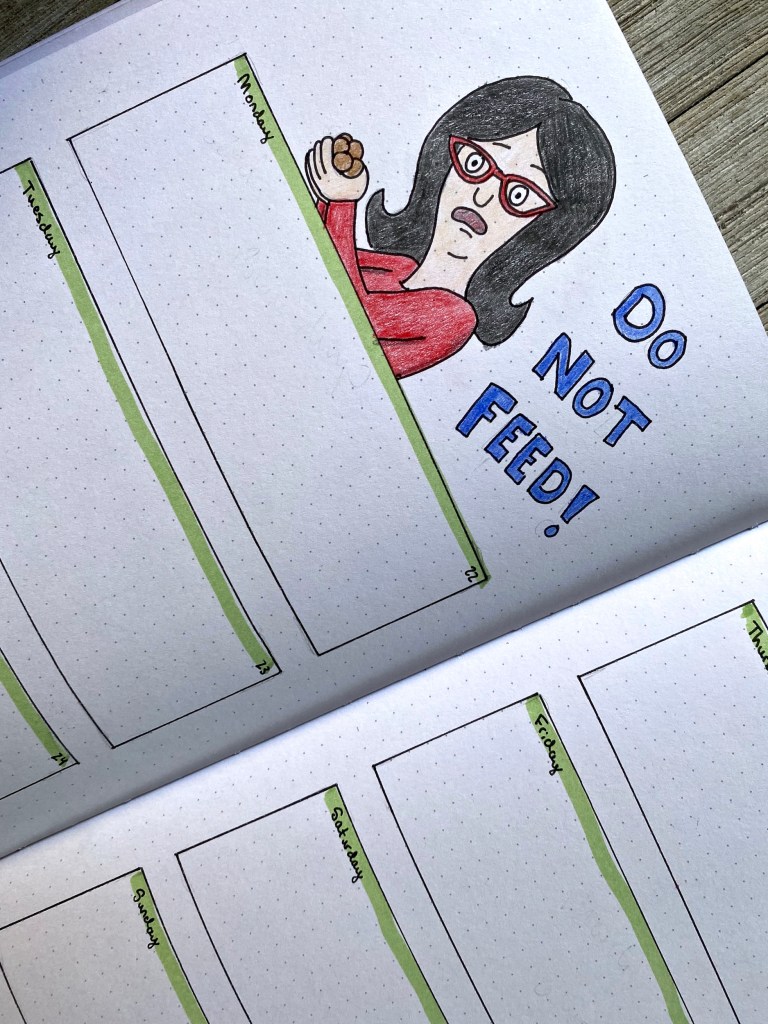
The third snapshot is from the episode “Eat, Spray, Linda”. Linda gets stranded on her birthday and struggles to make it home. While the family is looking for her, Bob and the kids visit a bakery and the owner has a photo of Linda that says “Do Not Feed” on it. I think someone overdid it on the free samples!

Bob's Burgers BUJO for March with Linda

Check back next month for a Gayle themed spread! I’ll have to get started on it right now so I’m not late again!

DIY Spring Sensory Bottle

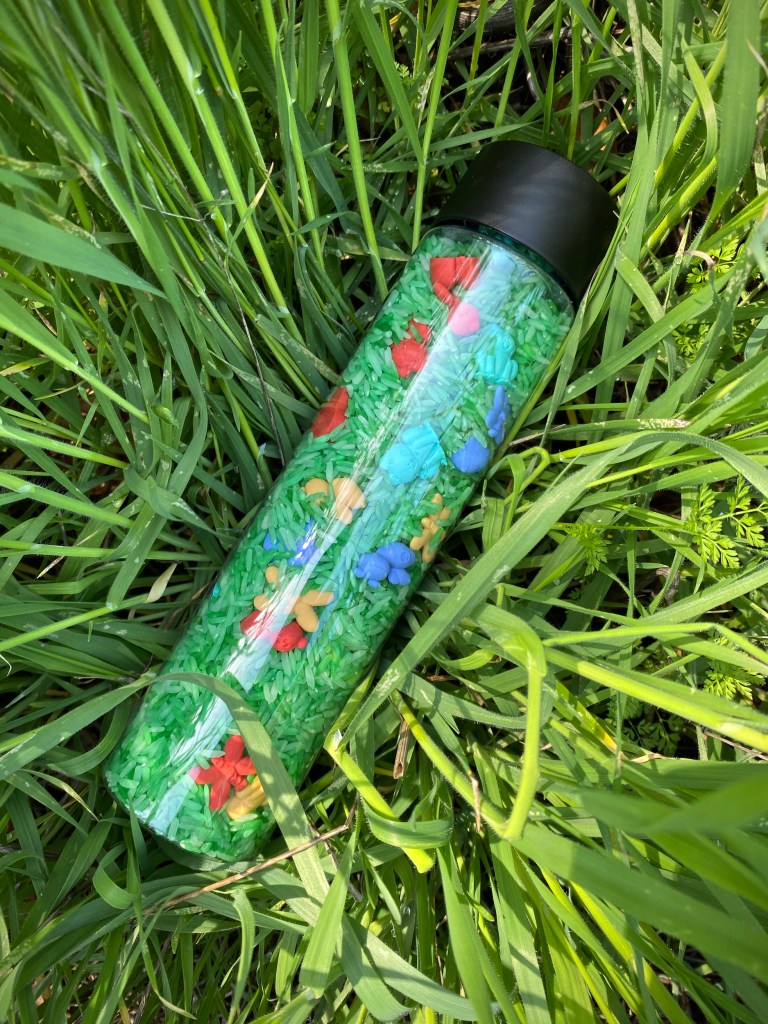
Happy Spring everyone! Spring has now sprung and it’s a time for fresh growth, vibrant colors and new life! Part of the fun in raising Zoey is making things that teach and fascinate her. And, if I’m being completely honest, I find sensory bottles fascinating too, so let’s make one!

SUPPLIES

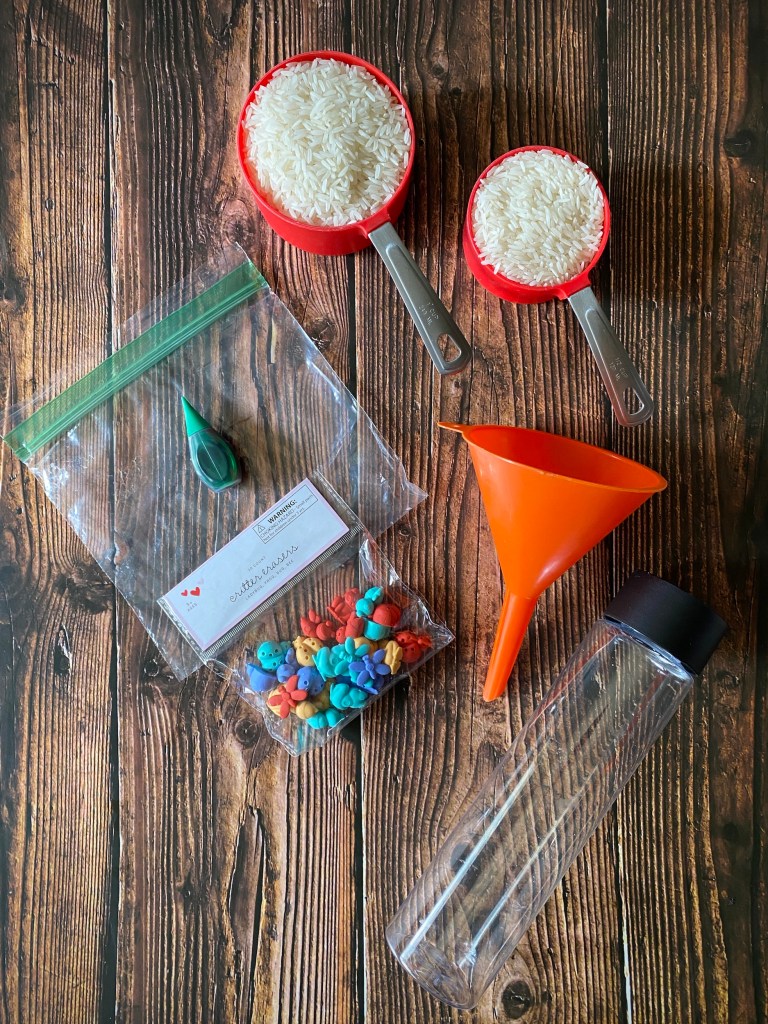
  • A 16 ounce clear, plastic bottle
  • A funnel
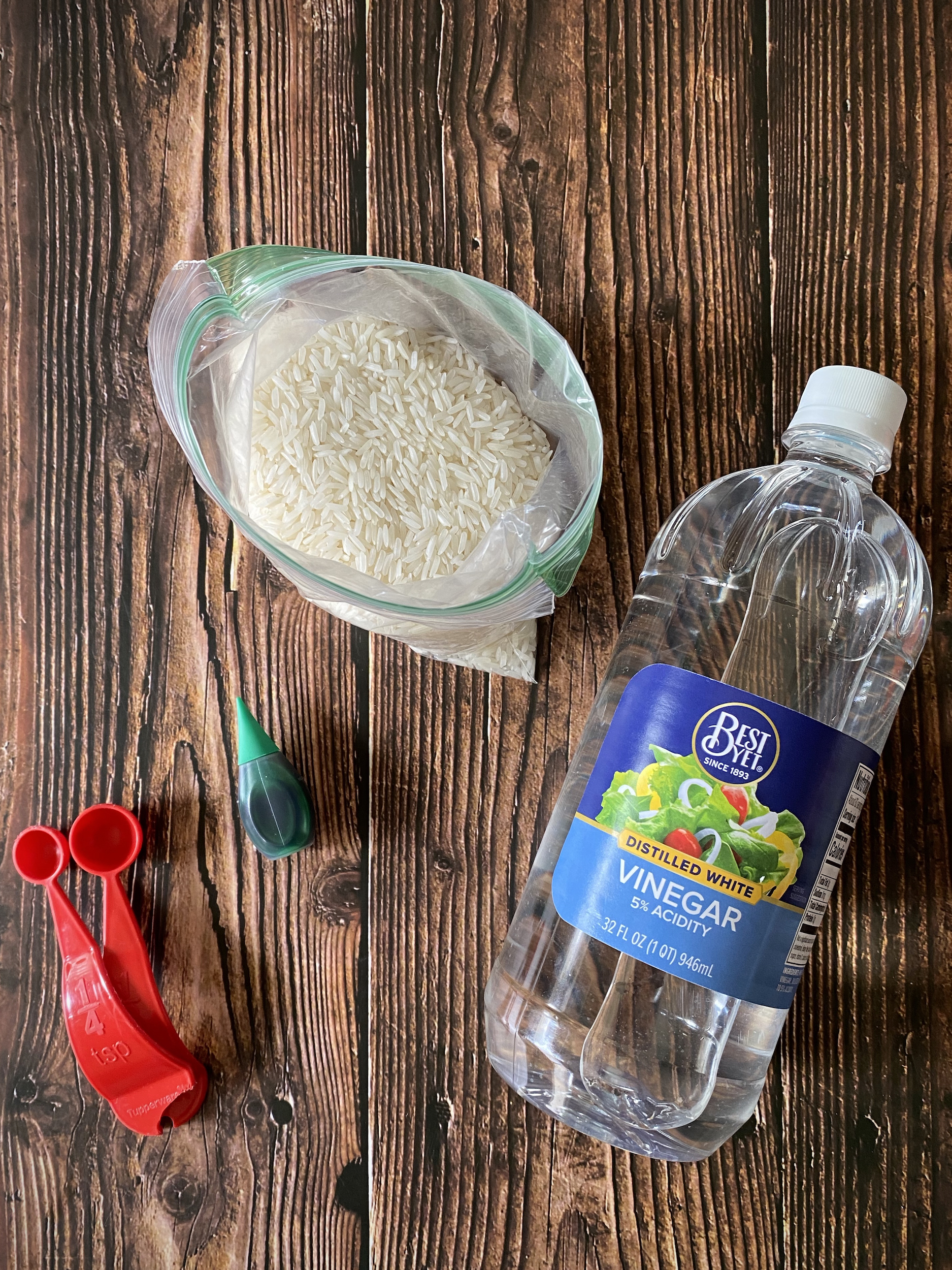
  • 1 1/2 cups of white rice
  • 3/4 teaspoon of white vinegar
  • Green food coloring
  • Miniature insect (or other spring inspired) erasers 
  • Glue (optional)

INSTRUCTIONS

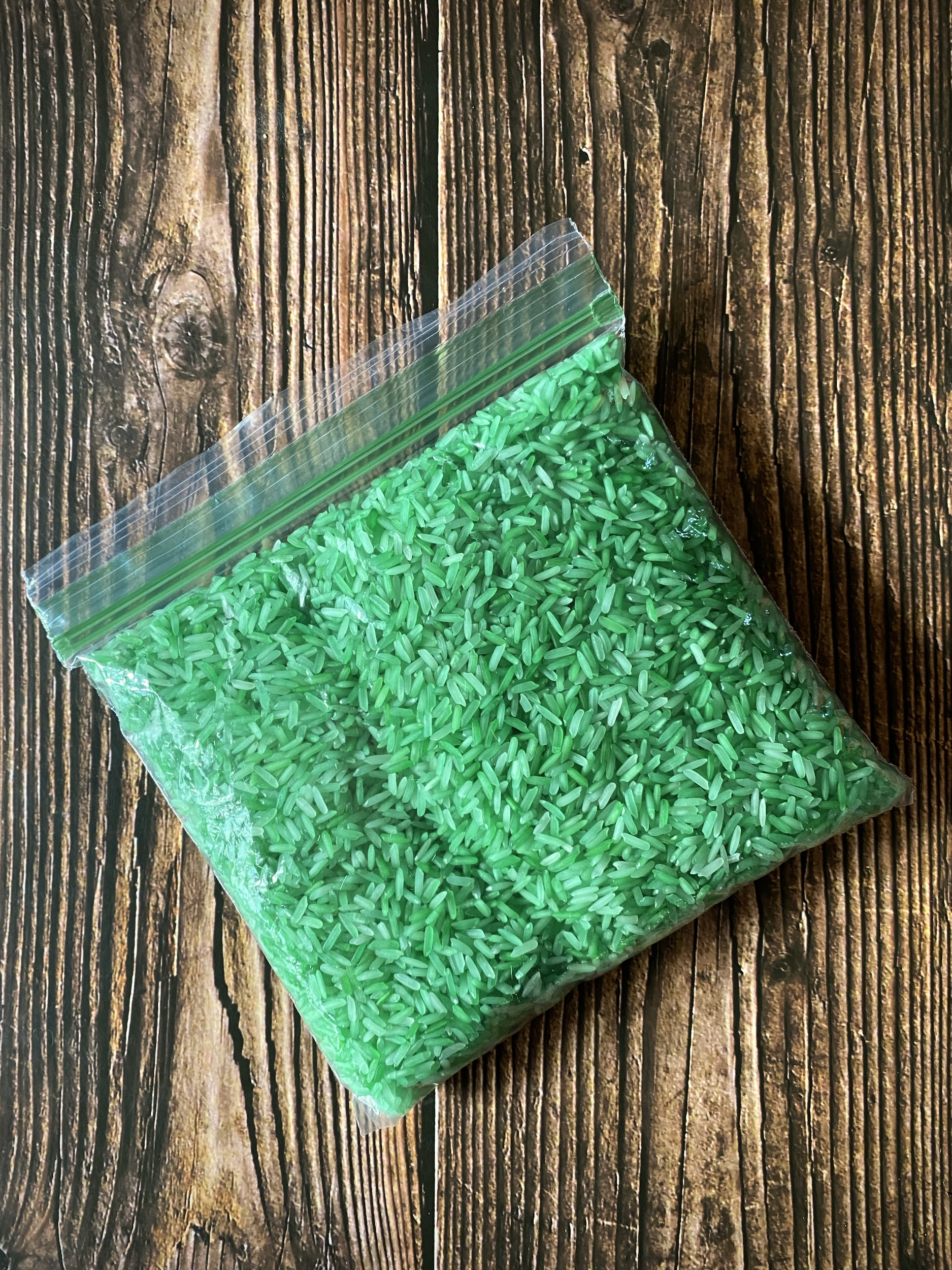
  1. Place the rice in a resealable plastic sandwich bag.
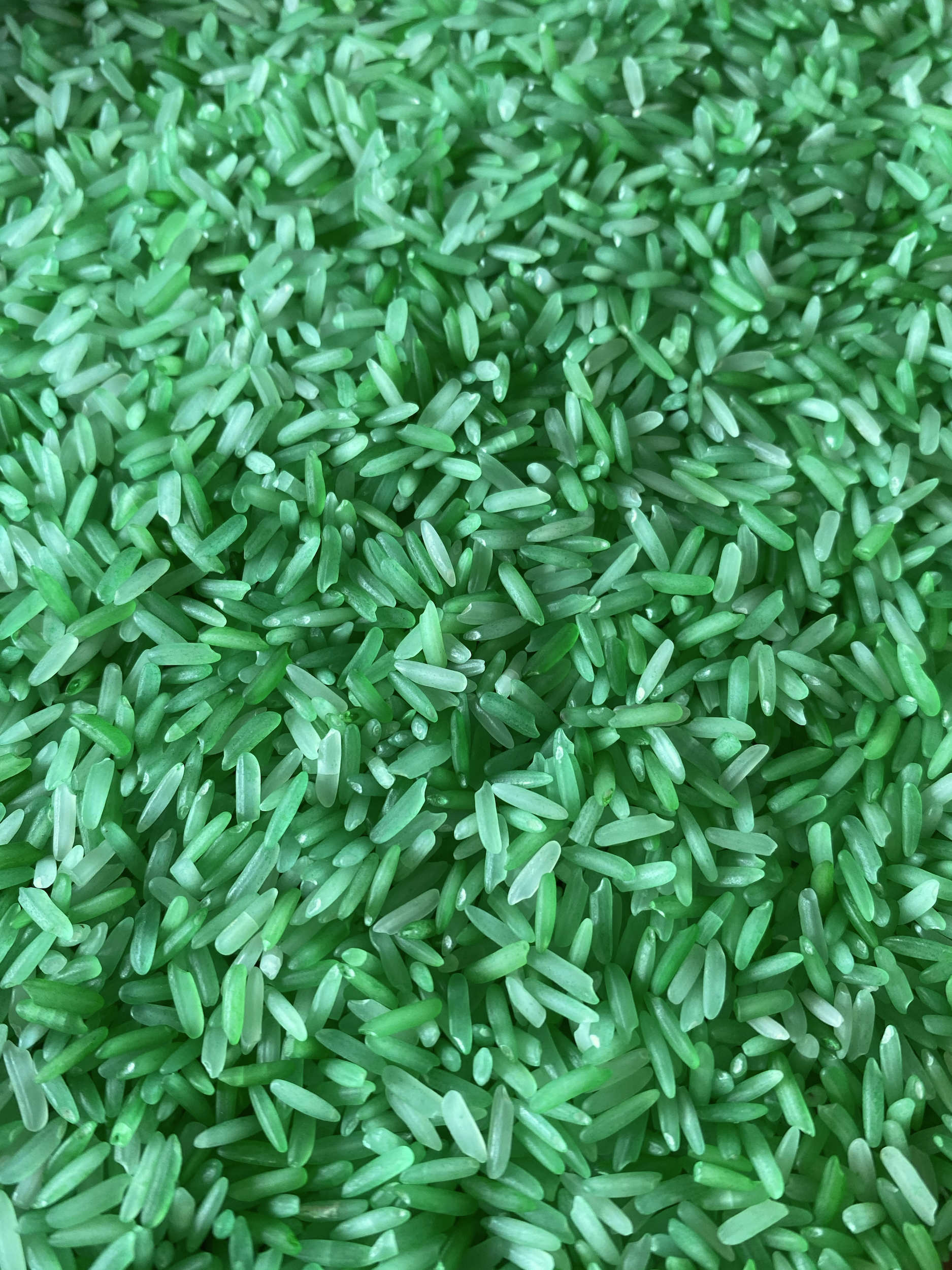
  2. Add the vinegar and food coloring to the rice. You can add however many drops of food coloring you’d like, I added 20 drops.
  3. Seal the bag and shake well until the color is well dispersed throughout.
  4. Spread the rice onto a baking sheet and allow it to dry overnight.
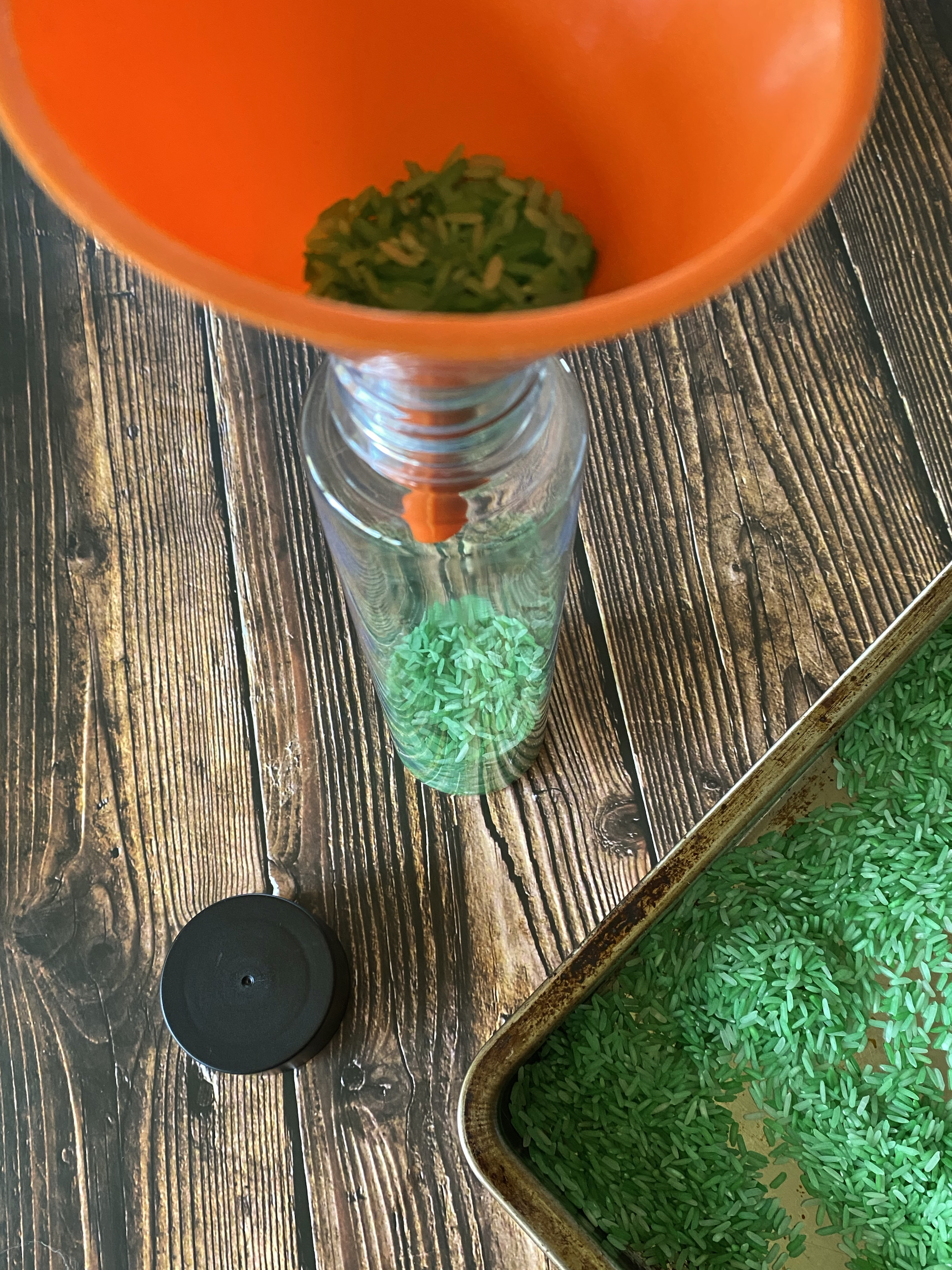
  5. Place the funnel in the mouth of your bottle and use it to fill the bottle with half of the rice.
  6. Remove the funnel and add half of the insect erasers.
  7. Screw the lid back onto the bottle and shake until well incorporated, then remove the lid and replace the funnel.
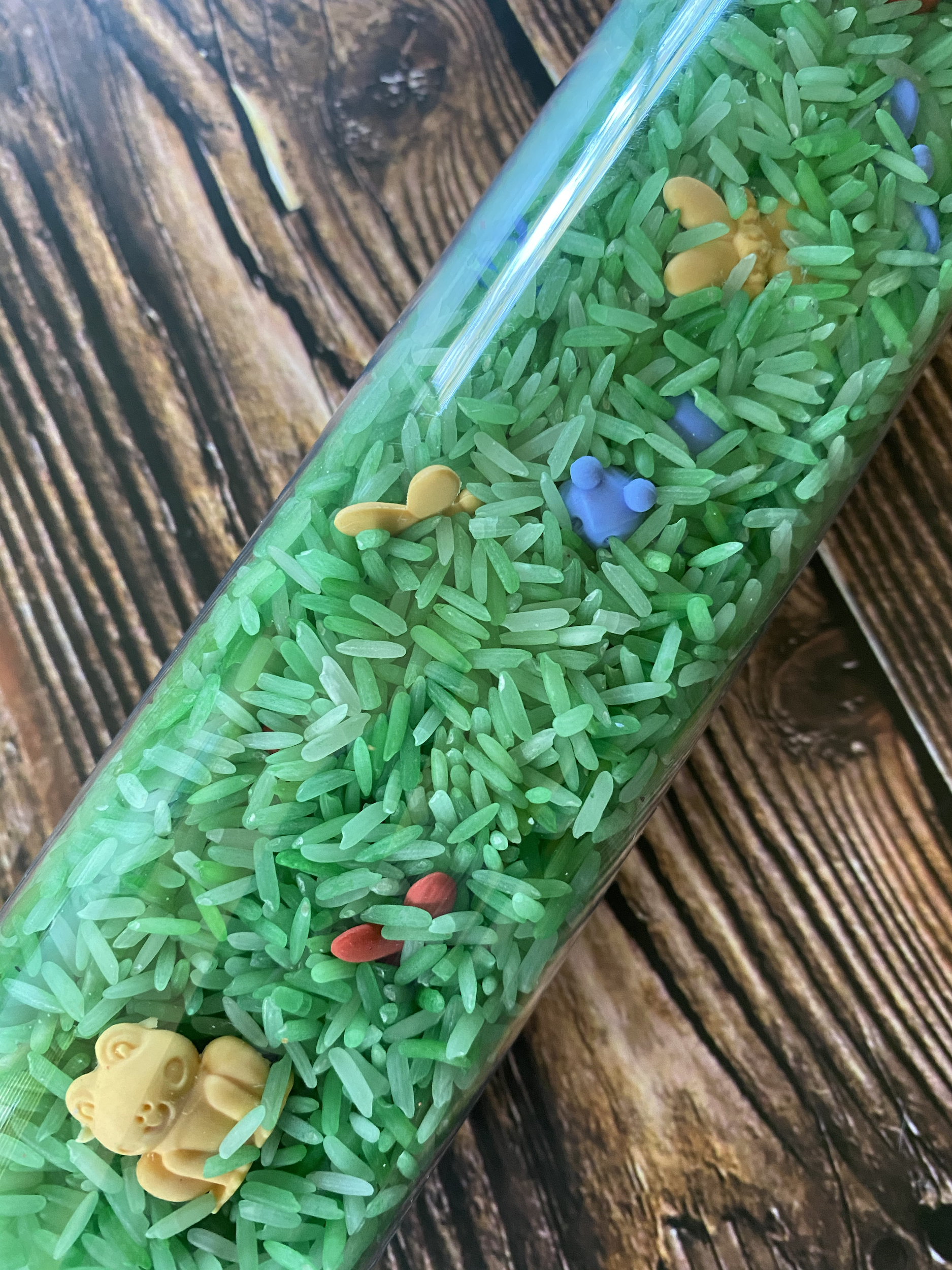
  8. Add the rest of the rice and the rest of the insect erasers.
  9. Replace the lid onto the bottle and shake well again until well incorporated.
  10. If your child is older and you worry about him/her undoing the lid, you can coat the inside of the lid with glue, then screw it back onto the bottle. This will secure the lid and make it harder for little ones to unscrew the lid and create a leak or spill the bottle’s contents.

Enjoy!
Let’s Create Our Own Candles!

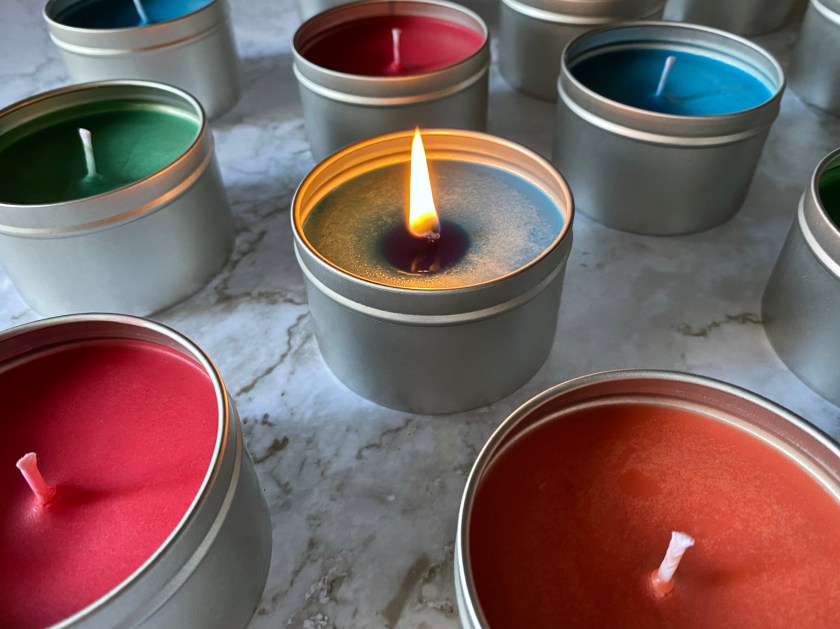
Lets Create Our Own Soy CandlesI bought a soy candle kit for myself several years ago, opened the box and looked at the supplies, then folded it back up and set it aside. For years! I don’t know if I felt intimidated or scared I’d get it wrong, but I’ve been missing out because it is pretty darn satisfying to make your own candles!

If you’re a beginner, like myself, I highly recommend starting with a candle kit. I purchased this kit from www.candlewic.com. Unfortunately I no longer see these or any kits available (this may change in the future), but they do sell all the supplies individually or you can purchase a kit from another reputable website, including Amazon, Bramble Berry, Candle Science, etc. Each kit should include instructions with specific temperatures to add any colors or scents. In this post, I’ve refined the instructions from my kit which you can reference to create your own candles or apply the basic principles if using another candle kit.

Lets Create Our Own Soy Candles

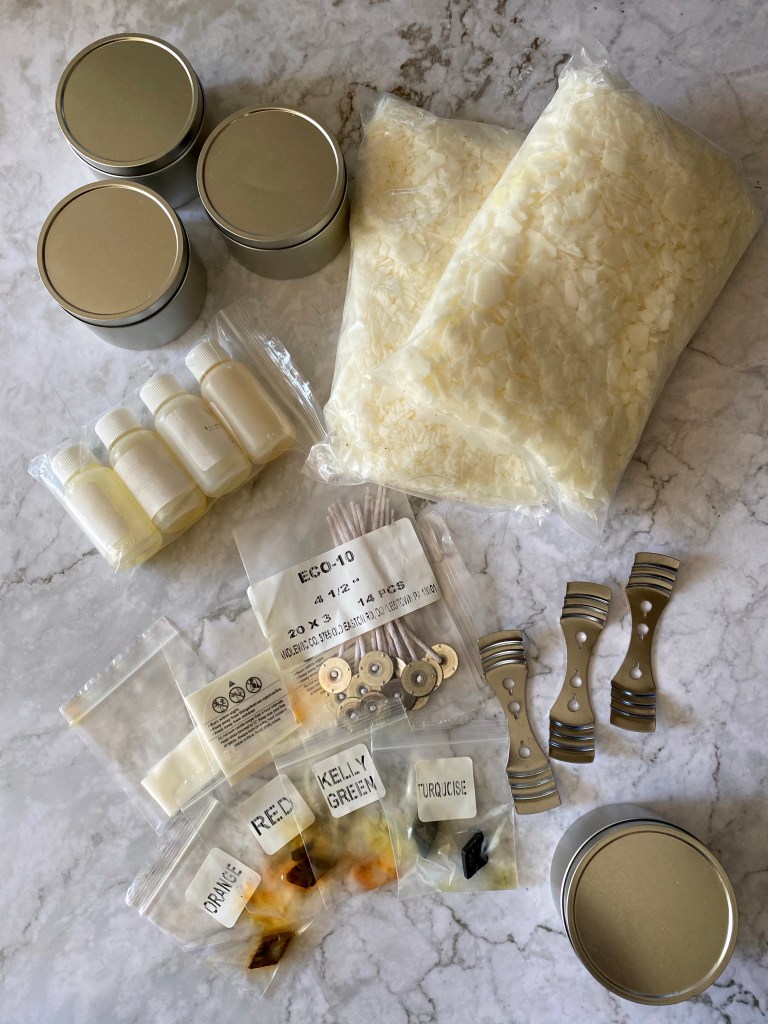
SUPPLIES

Lets Create Our Own Soy Candles

  • 12 candle containers (8 oz)
  • 12 pre-tabbed wicks
  • 12 glue stickers
  • Pouring pot
  • Thermometer
  • Stirring utensil
  • 4 pounds of soy wax
  • 4 different color dye blocks
  • 4 different fragrance oils (1 oz)
  • 3 bow tie wick bars
INSTRUCTIONS
  1. Prepare your candle containers. Place a glue sticker onto each pre-tabbed wick, then place one wick directly in the center of each candle container.

    Lets Create Our Own Soy Candles
  2. Place one pound of soy wax into the pouring pot. If you have a kit, this may already be measured out for you, if not use a kitchen scale.

    Lets Create Our Own Soy Candles
  3. Set the pouring pot into a large saucepan filled a third of the way with water and bring the water to a soft boil.
  4. Allow the wax to melt, then insert your thermometer and continue to heat until it reaches 175 F.
  5. At 175 F, add the color dye block and stir until it’s completely melted and blended with the wax.
  6. Remove the pouring pot from the water and allow the wax to cool to 140F.
  7. At 140 F, add the fragrance oil and stir until well incorporated.
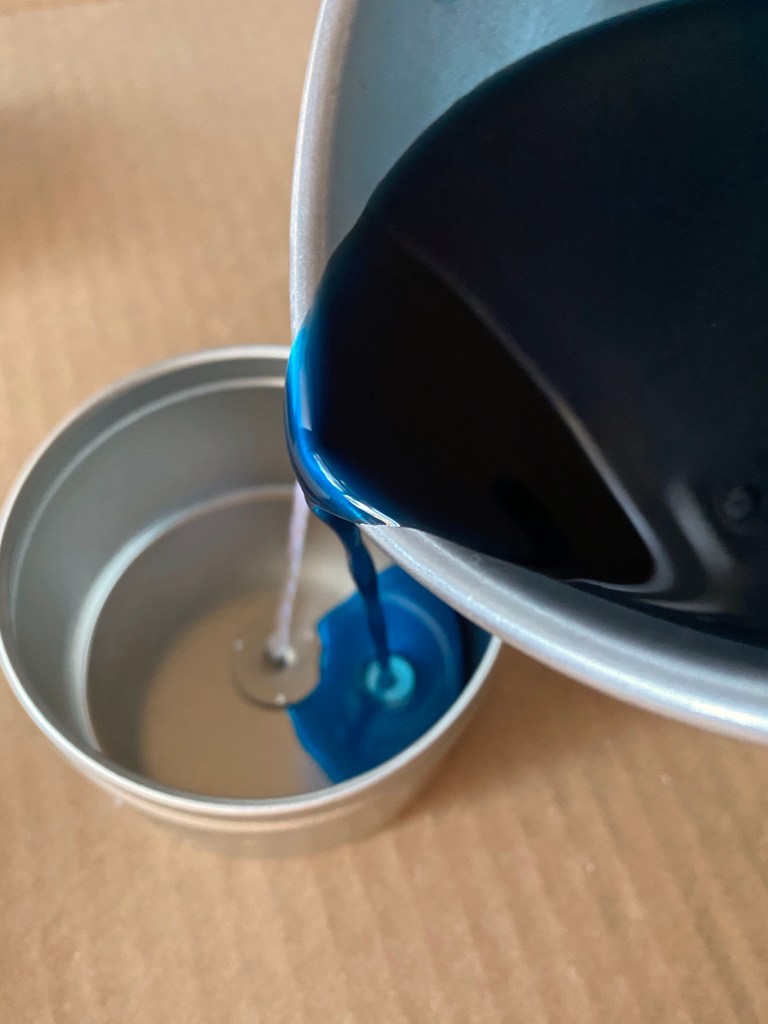
  8. Carefully pour the dyed and fragrant wax into three of the prepared wax containers. One pound of wax, one color dye block and one ounce of fragrance can create three 8 ounce candles.

    Lets Create Our Own Soy Candles
  9. Center the wicks in the bow tie wick bars and allow them to cool and set completely on a level surface for at least 24 hours.

    Lets Create Our Own Soy Candles
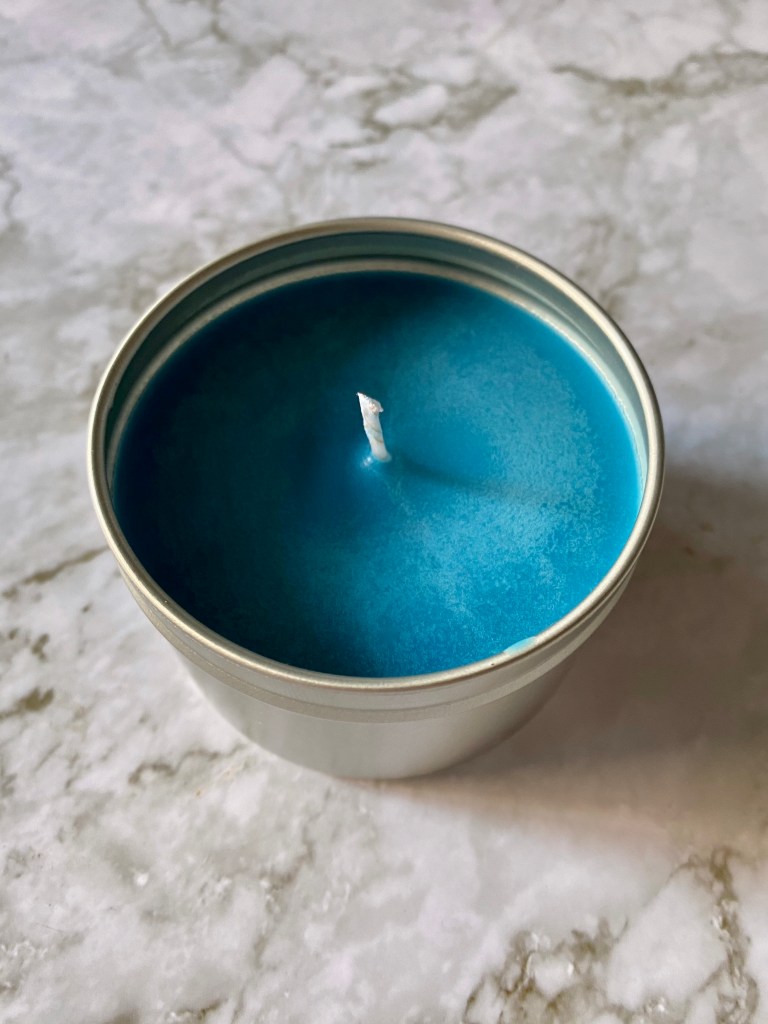
  10. Once cooled and set, remove the bow tie wick bars and cut the wicks.

    Lets Create Our Own Soy Candles
  11. Enjoy!

    Lets Create Our Own Soy CandlesLets Create Our Own Soy Candles

I plan on using these in our home, but I would love to make more for family and friends! Do you use candles in your home? What is your favorite scent? Mine is Spruce or Mulled Cider, all the holiday feels!

DIY Autumn Leaves Sensory Bottle

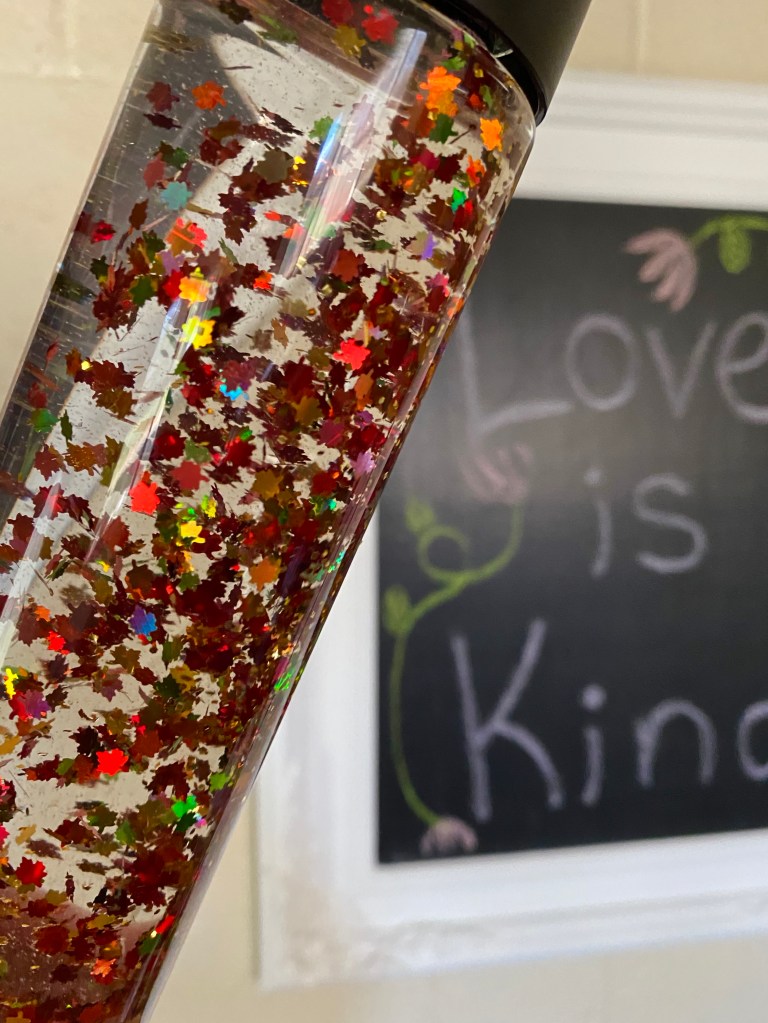
DIY Autumn Leaves Sensory BottleI love Autumn, it has to be my favorite season of the year!

After creating a Summer-themed ocean wave bottle, I felt inspired to create a sensory bottle for each season and I immediately thought of swirling multi-hued Autumn leaves!  Part of the fun in raising Zoey is making things that teach and fascinate her. And, if I’m being completely honest, I find sensory bottles fascinating too, so let’s make one!

DIY Autumn Leaves Sensory Bottle

SUPPLIES
  • 16 ounce clear, plastic bottle
  • 6 ounces of hot water
  • Clear glue
  • Slender whisk
  • Glycerin
  • Leaf-shaped glitter
  • Regular glitter (optional)
  • More hot water
  • Glue for the lid

DIY Autumn Leaves Sensory Bottle DIY Autumn Leaves Sensory BottleDIY Autumn Leaves Sensory Bottle

INSTRUCTIONS
  1. Pour the 6 ounces of hot (as hot as your tap will run) water into your bottle.
  2. Add 2.5 to 3 ounces (or more) of glue to the hot water in your bottle. The more glue you add, the slower your leaves will swirl and fall.
  3. Whisk the glue in the hot water until well incorporated. You can also replace the lid of the bottle and shake, however this created a lot of foam bubbles for me. They will go away, but it will slow down your progress.
  4. Measure 1 to 2 tablespoons of Glycerin and whisk or replace the lid and shake again.
  5. Add your glitter. I used several different hues of leaf shaped glitter and a few pinches of regular gold glitter.
  6. Pour more hot water into the bottle. Stop before reaching the top, replace the lid and turn the bottle over several times to check how everything moves. At this point you can add more glitter, more glue to make it fall slower, and/or more glycerin to smooth everything out.
  7. After you’re satisfied with the flow of the bottle’s contents, remove the lid again and fill the bottle all the way to the top with the hot water.
  8. If your child is older and you worry about him/her undoing the lid, you can coat the inside of the lid with glue, then screw it back onto the bottle. This will secure the lid and make it harder for little ones to unscrew the lid and create a leak or spill the bottle’s contents.

DIY Autumn Leaves Sensory Bottle

DIY Peasant Belle Peg Doll

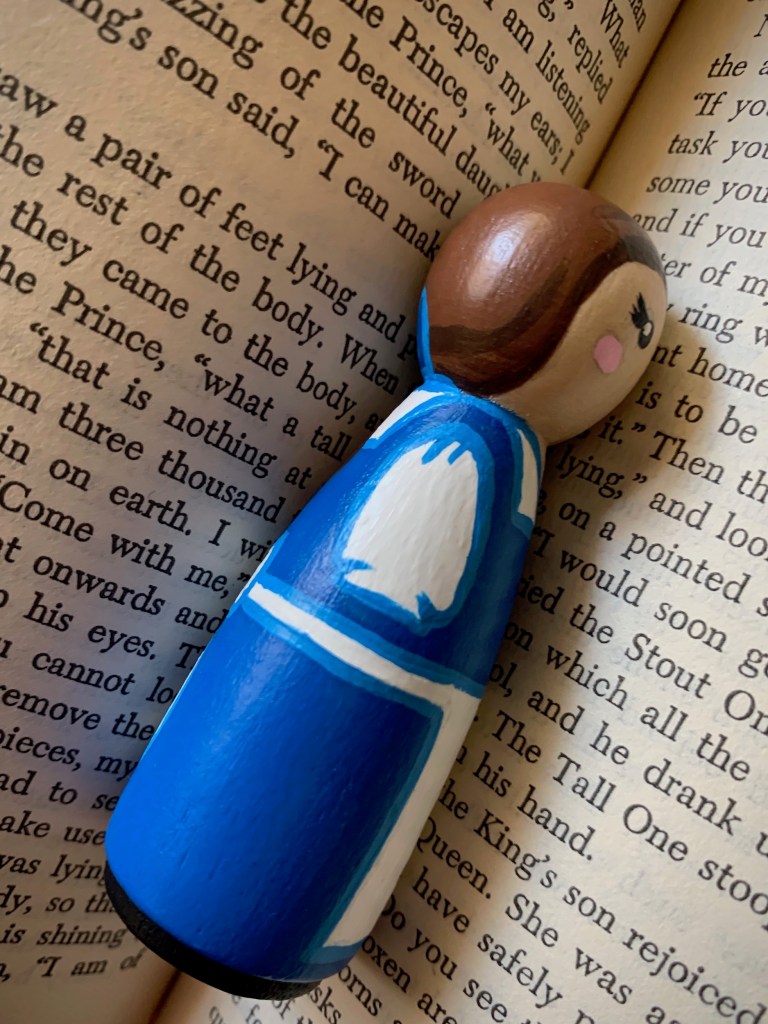
DIY Peasant Belle Peg Doll DIY Peasant Belle Peg Doll DIY Peasant Belle Peg DollPart of the fun in raising Zoey is making things that delight her; I want to create lasting, meaningful toys for her that are made with love and will be loved! Wooden toys are classic and beautiful, when created and treated right, they can last a lifetime; so let’s make some!

It’s no secret that Cameron and I love Disney. Zoey’s middle name was inspired by one of my favorite Disney princesses, Belle, and that Belle in her name has also led to another Disney nickname, Tinker Bell. I cannot wait to create a whole set of peg dolls for her, but these two characters hold the most significance until she begins watching the classics on her own.

We’ve created a Tinker Bell Peg Doll, check her out!

This week I’ll be sharing the steps I took to create a Belle peg doll in her blue peasant dress for Zoey.

DIY Peasant Belle Peg Doll

SUPPLIES
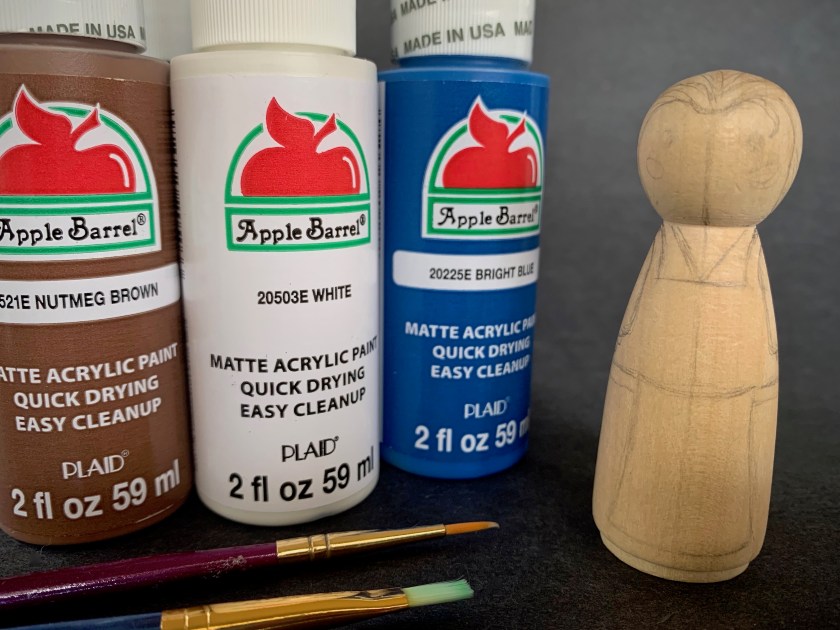
  • Blank peg doll (I used a “small angel” or “girl” shape/size)
  • Small, flat & fine tip paint brushes
  • Paint palette (or a tray for your paint)
  • Blue non-toxic acrylic paint
  • White non-toxic acrylic paint
  • Light blue non-toxic acrylic paint
  • Brown non-toxic acrylic paint
  • Dark brown non-toxic acrylic paint
  • Black non-toxic acrylic paint
  • Non-toxic varnish (I used Duraclear Ultra Matte Varnish)
INSTRUCTIONS

DIY Peasant Belle Peg Doll

DIY Peasant Belle Peg Doll

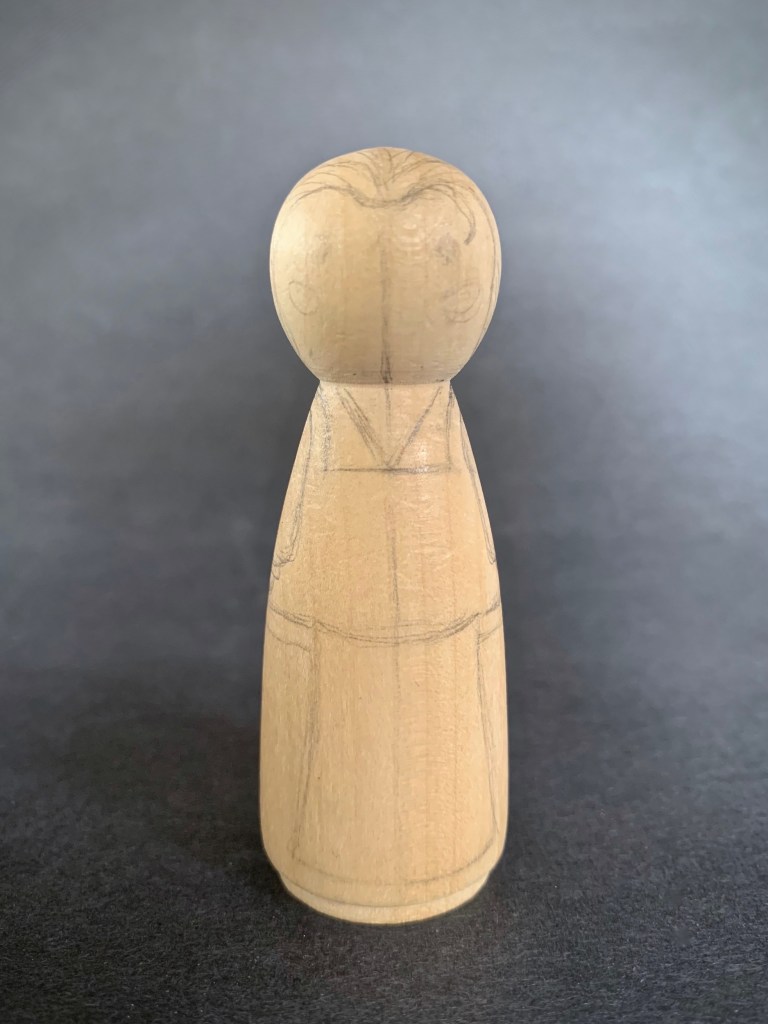
  1. With a pencil, lightly sketch Belle onto your blank peg doll. Belle wears a dress over a white blouse, I gave her sleeves so more of the blouse can be seen.
  2. Begin painting your peg doll with the base layers first. I started with the blue of her dress and hair bow, the white of her blouse and apron, and the brown of her hair. Allow this paint to dry before moving on to avoid smudging, then apply a few more layers of each until you’re happy with the colors and textures.
  3. Paint the very bottom and edges of the peg doll black to signify her shoes.
  4. After the base layers have dried, paint a border of light blue on the edges of her apron, shirt and hair bow. If you don’t have a lighter shade of blue, you can create some by adding a small amount of white paint to the original blue and blending.
  5. Paint dark brown accents on and around the hair, don’t forget her ponytail in the back!
  6. Taking something small and round (I used the opposite end of one of my smaller paint brushes) dip it in black paint and dot the two eyes. Using the finest tipped paintbrush you can find, give her an eyelash or two on each eye.
  7. Once the eye paint has dried, add a highlight dot to each eye with a fine tipped paintbrush and white paint.
  8. Using the same method as the eyes, dip the opposite end of a slightly larger paintbrush into light pink paint and dot the blush under each eye.
  9. With a little white paint, give her a few sparkles of pixie dust on the hem of her dress or wherever else you feel it will look right!
  10. Allow for all paint to completely dry, then apply a varnish and allow it to dry. You can apply as many coats as you want for the finish you want, just allow them to dry in between applications and before handing her over to your child.
  11. Voilà! Belle is done and ready to be played with! Enjoy!
DIY Peasant Belle Peg Doll DIY Peasant Belle Peg Doll